Twin Home vs Single-Family at Arden: Which Fits You?
In this article
"The real choice at Arden isn't between three floor plans — it's between two home types. Do you want a duplex-style twin home, or a detached single-family house? Once you answer that, the plan mostly picks itself.
What a twin home actually is
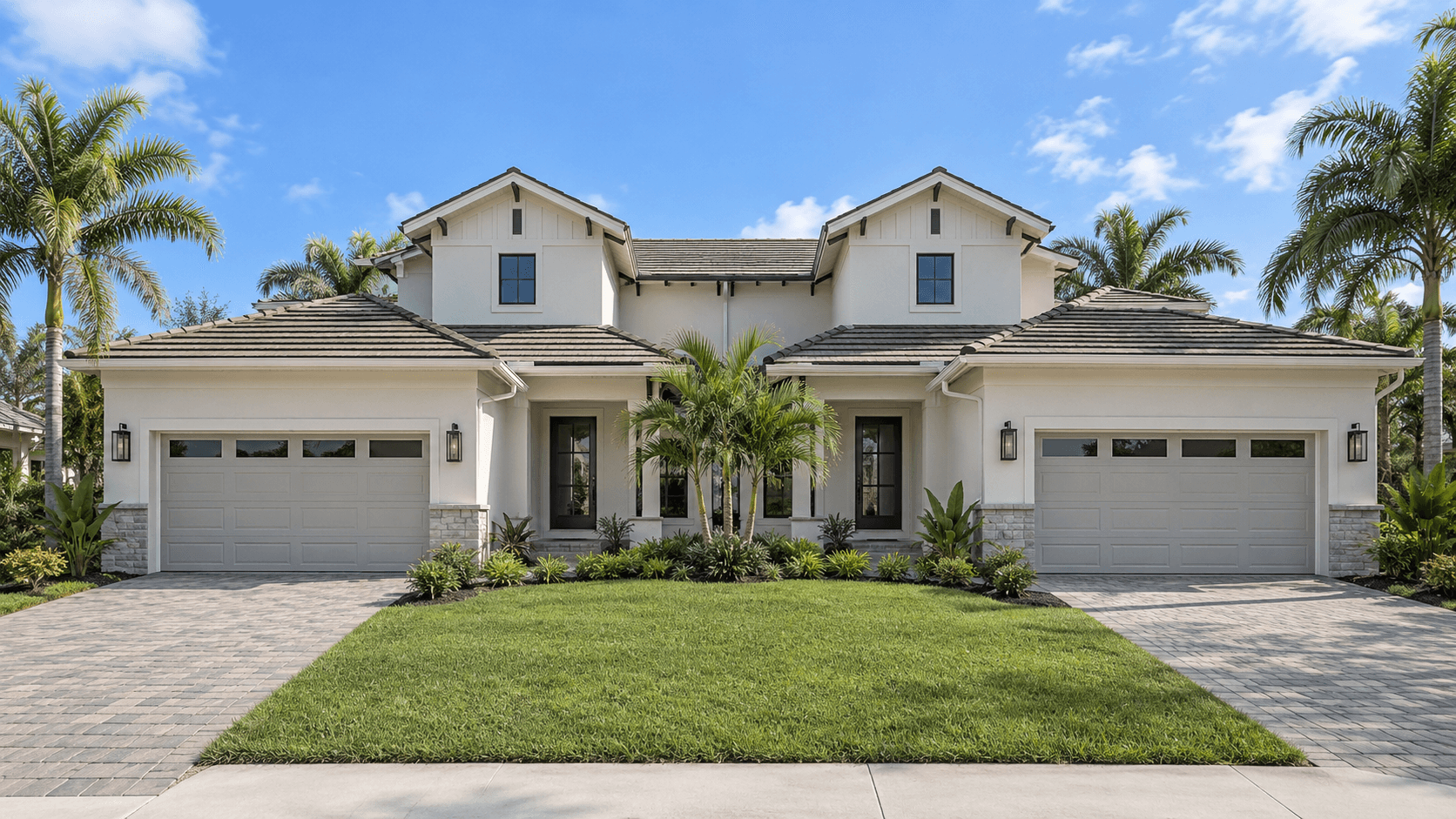
Both Arden plans in the Twin Homes Collection — the Azalea and the Hydrangea — are duplex construction: two homes built as one structure, sharing a single interior wall. Each unit has its own entrance, its own garage, its own yard. From the street, most buyers can't tell a well-built twin home from a detached one. The difference only shows up in two places: the shared wall itself, and the smaller lot that comes with it.
That smaller footprint is the trade-off, and it's a deliberate one. Less lot means less to maintain — less lawn to mow, less exterior to upkeep — which is exactly why twin homes tend to run lower priced and attract buyers who want new construction without taking on a large yard.

What Providence gives you instead
The Providence Collection's Caraway plan is a fully detached single-family home. No shared wall, a larger lot, and the only 3-car garage in the community. You're paying more to get there, but what you're paying for is genuinely different — not just a bigger version of the same thing.
A detached home also gives you more flexibility with what you do with the outdoor space. A twin home's yard is smaller by design; a single-family lot has more room for a garden, a play structure, or just more separation from the neighbors on either side.
Who actually picks which one
Buyers who choose the Twin Homes Collection at Arden tend to be:
First-time buyers who want new construction at the lowest entry point the community offers
Buyers downsizing from a larger home who don't want yard work anymore
Anyone who's lived in a townhome or duplex before and knows a shared wall isn't a dealbreaker for them
Buyers who choose Providence tend to be:
Families who want a private yard for kids or pets
Buyers who specifically need the 3-car garage — for a boat, a workshop, or just two cars and storage
Anyone who's tried a shared-wall home before and knows it's not for them
Neither group is wrong. It genuinely comes down to what matters more to you: the lower entry price and lower maintenance of a twin home, or the privacy and extra space of a detached one.
The noise question, honestly answered
This is the question every twin-home shopper actually wants answered and rarely asks directly: will I hear my neighbor? Modern duplex construction uses a fire-rated, sound-dampening wall assembly between units specifically because builders know this is the top concern. In practice, most twin-home residents report that everyday sounds — conversation, TV, normal foot traffic — don't transfer noticeably. What can transfer is impact noise like a dropped object or a dog running across a hard floor directly against the shared wall, though this is true of any multi-unit building, not something specific to Arden. If this is a serious concern, ask to stand inside a model with the doors closed and listen for yourself — it's a better test than any spec sheet.
Maintenance, side by side
The maintenance difference between the two home types is bigger than most buyers expect going in. A twin home's smaller lot means less lawn, less exterior surface area, and often less exposure to the kind of landscaping upkeep that eats a weekend every month in Florida's climate. A single-family lot gives you more outdoor space to actually use, but it comes with more of it to maintain — more lawn, more edges, more irrigation to think about. Neither is wrong, but it's worth being honest about how much time you actually want to spend on yard work before you pick the bigger lot just because it sounds nicer.

How this affects your monthly budget beyond the mortgage
The price difference between a twin home and a single-family home isn't the only cost gap worth thinking about. A larger single-family lot typically means a higher property tax bill and more to insure, since insurance is tied to square footage and rebuild cost. It also usually means a bit more in utility costs to heat and cool the extra square footage in Florida's climate. None of this should scare you off the Providence Collection if it's genuinely the right fit — it's simply worth budgeting for the full picture rather than comparing only the sticker price of the home itself.
What doesn't change between them
Whichever type you choose, Lennar builds every home at Arden Everything's Included — quartz countertops, a stainless steel gas range with griddle and built-in microwave, ceramic tile through the main living areas, 9-foot ceilings, impact aluminum windows and a smart-home package with a Ring Video Doorbell Pro. You're not sacrificing finish quality to get the lower twin-home price; you're sacrificing square footage and the shared wall, and nothing else.
Both home types also sit inside the same amenity package — Lake Arden, the resort pool with its splash pad and adults-only section, the tennis court, 20 miles of walking trails, and The Barn at Arden's working farm. Buying the smaller, less expensive plan doesn't mean a smaller slice of the community.
Resale and rentals aren't the question here
Some buyers try to reason their way to a decision by asking which home type will be easier to sell someday. That's the wrong lens for a home you're planning to actually live in. Pick the one that fits your household now — the layout, the lot, the maintenance load you actually want to carry — and let that decision stand on its own.

The honest answer for undecided buyers
If you're genuinely torn, walk both. A twin home and a single-family home read very differently in person than they do on a spec sheet, and ten minutes standing in each will usually settle it faster than any comparison a blog post can give you.
Keep exploring
Still deciding? These cover the rest of what buyers usually want to know: how all three Arden plans compare. Azalea vs. Hydrangea, side by side. the step-by-step buying process. our Loxahatchee homes-for-sale guide.
Common Questions
Is a twin home the same as a townhome?
They're similar but not identical. A twin home shares one wall with one neighbor; a townhome typically shares walls with homes on both sides in a row. Arden's Twin Homes Collection is the two-unit, one-shared-wall version.
Do twin homes at Arden have their own yard?
Yes — each twin home has its own private entrance, garage and yard. It's a smaller lot than the single-family Caraway plan, but it's not a shared yard.
Is the Caraway the only single-family plan at Arden?
Yes, currently. The Twin Homes Collection covers the Azalea and Hydrangea plans; Providence's Caraway is the community's one detached single-family option.
Which is quieter — a twin home or a single-family home?
A well-built twin home engineers for sound separation between units, and most residents don't notice the shared wall day to day. If total silence from any adjoining structure matters most to you, a detached single-family home removes the question entirely.
Can I add a fence or garden to a twin home lot?
Ask your New Home Consultant about what's allowed on the specific homesite you're considering — this varies and is confirmed at the time you tour.
Is one home type a better long-term value than the other?
Both are new construction in the same community with the same finish package and amenities. Which one is the better fit depends on your household's needs, not on one being objectively better than the other.
Not sure which one is you? Call 561-704-0091 or schedule a tour and walk a twin home and a single-family home back to back at Arden — most buyers know which one is theirs within the first ten minutes of standing inside both."