When Should You Inspect a New Construction Home?
In this article
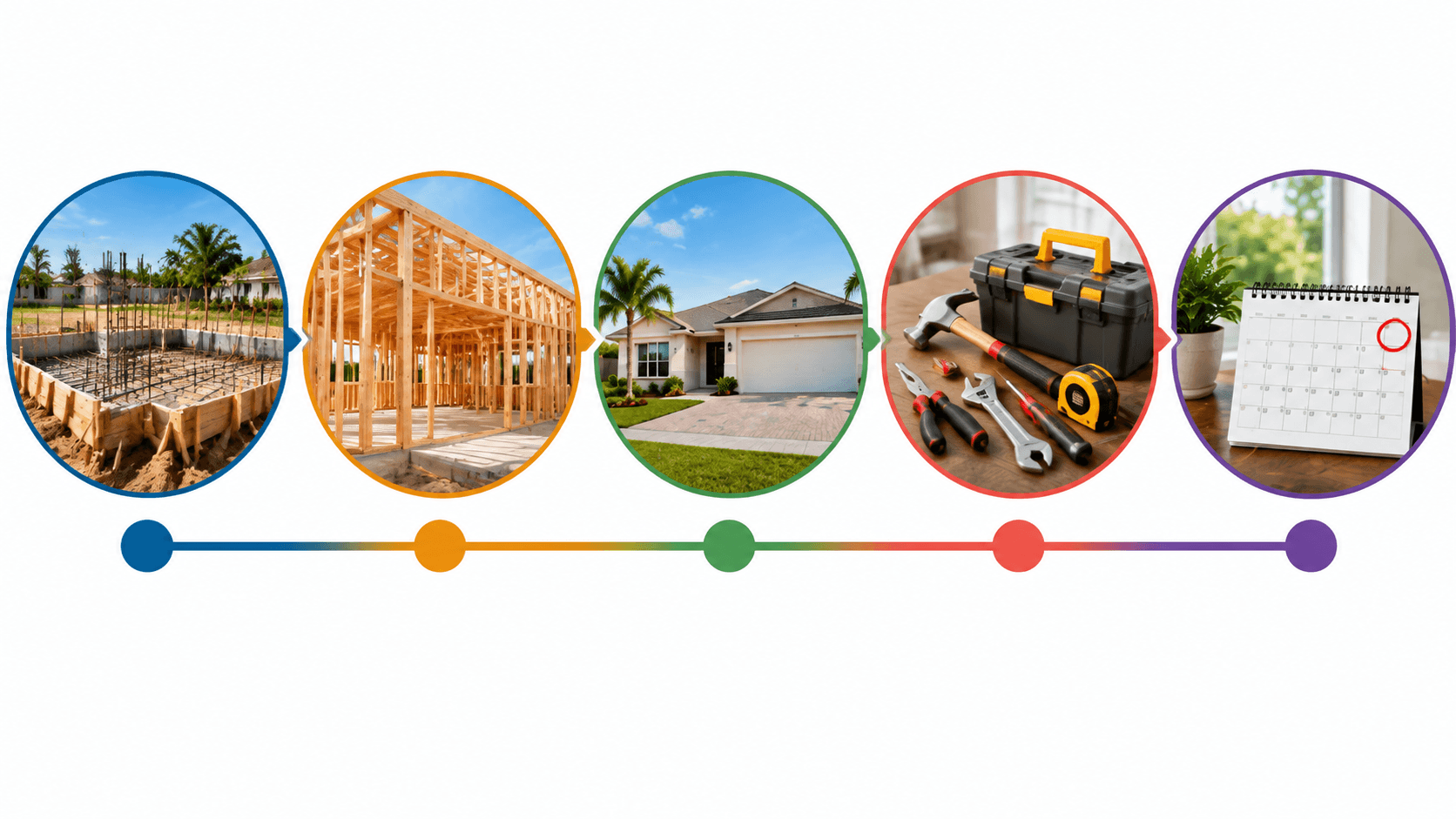
Inspect a new construction home when each stage gives the inspector something useful to see. The main opportunities are before the foundation pour when access is allowed, before drywall covers framing and rough systems, near completion before closing, after key repairs, and near a first-year warranty deadline.
Not every buyer gets every stage. The contract, builder access rules, build type, safety limits, loan, and schedule all matter. Ask early, put permission in writing, and do not enter an active site on your own.
Dates can move. Keep some spare time. Confirm each visit in writing.

The short answer by stage
Stage | Best time | What is visible |
|---|---|---|
Pre-pour | After forms and planned items are ready, before concrete | Site preparation and visible foundation elements |
Pre-drywall | After rough framing and main rough-ins, before insulation or drywall hides them | Framing, pipes, wiring, ducts, connectors, and wall openings |
Final | When the home is complete and utilities and systems can be tested | Finished exterior, rooms, fixtures, appliances, and systems |
Reinspection | After agreed repairs and before the area is hidden or closing occurs | The specific repaired items within the return scope |
11-month | Early enough to report before the written warranty deadline | Conditions that appeared during normal use |
This is a planning map. Your inspector and builder should confirm the exact readiness point.
Ask about inspection rights before signing
Inspection timing starts with the contract. The builder controls the job site before closing. It may require notice, insurance, a licensed inspector, a safety escort, or a set window.
Chase notes that builders may have rules about phase-inspection timing and access. Its new construction phase inspection guide describes pre-pour, pre-drywall, and final stages.
Ask these questions before the contract is final:
Which private check stages are allowed?
How much notice is required?
Who schedules site access?
What insurance or license proof is required?
Can the buyer attend?
How are findings delivered to the builder?
Will work pause long enough for the visit?
What happens if the build schedule changes?
Do not assume a right that is not in the files. If the wording is unclear, ask a Florida attorney.
Stage 1: Pre-pour inspection
A pre-pour inspection can occur before concrete covers visible foundation work. This stage is not available on every home. A completed inventory home may already be far past it. A slab may also move from preparation to pour quickly.
The inspector may review visible site preparation, forms, trenches, reinforcement, sleeves, and early lines within the agreed scope. The inspector is not the design engineer and does not replace required code inspections.
Timing is tight. The area must be ready enough to inspect but not yet covered. Confirm the builder's notice and safety process. Weather or trade changes can move the appointment.
If you cannot get this stage, do not ask the final inspector to claim hidden work is correct. Keep builder photos and permit records when available.
Stage 2: Pre-drywall inspection
This is often the clearest view of what will be behind the walls. The structure is up, and rough plumbing, wiring, and ducts may be in place. Drywall and insulation should not block the view.
The best time is after the main rough work is complete and before concealment. If you arrive too early, key trades may be missing. If you arrive too late, key details may be covered.
Miami-Dade County says permitted work must be inspected before it is covered. Government inspections and private inspections have different purposes. See the county's building inspection guidance.
Use the detailed pre-drywall inspection guide to prepare for this stage.
Stage 3: Final inspection before closing
The final inspection should happen when the home can be tested. Power and water should be on. HVAC should operate. Plumbing fixtures, outlets, doors, windows, appliances included in the scope, and safety devices should be installed.
The home does not need to look staged. It does need to be complete enough for a meaningful inspection. Missing utilities or unfinished systems create limits and may require a return visit.
The inspector may review the visible structure, roof, exterior, electrical, plumbing, HVAC, interior, insulation, and site conditions within the agreement. Florida lists these areas in Chapter 61-30 home-inspector rules.
Schedule with time to read the report. Do not place the first check on the morning of closing. The exact buffer comes from the contract and builder process.
The final new construction home check guide explains what to do with the report.

Stage 4: Reinspection after repairs
A reinspection is useful when an key item was repaired and one more expert look would help. It may occur before closing or before the work is covered.
Ask the first expert whether a return visit is offered. Confirm the fee, scope, and report format. A reinspection normally focuses on listed items. It is not always a second full check.
Get a clear repair status from the builder before scheduling. If the trade has not finished, the visit may be wasted. If the repair will be hidden, ask whether the expert can return before concealment.
Remember that a visual reinspection cannot prove every hidden part of the repair. A licensed trade, engineer, or permit expert may have a separate role.
Stage 5: Final walkthrough
The final walkthrough is not a substitute for the home check. It is usually the buyer's last look before closing. You may confirm visible repairs, check that agreed items remain, and note new damage.
Bring the check summary, repair list, and builder responses. Use normal controls only. Do not open equipment or repeat unsafe expert tests.
If something key is incomplete, contact your agent, closing expert, lender, or attorney as needed. The walkthrough does not automatically extend the closing date.
Stage 6: 11-month warranty check
After living in the home, you may see issues that were not clear before move-in. Doors, drains, HVAC, grading, sealants, and finishes have gone through normal use and weather.
Many owners schedule a review near the end of a stated one-year workmanship period. The warranty controls the actual date and notice method. Month 11 is only a buffer idea.
The 11-month warranty check guide shows how to read the warranty, choose a date, and submit a clear record.
Why one final check may not show everything
A finished home lets the expert test many systems together. It does not reveal every pipe, wire, connector, or framing detail behind walls and concrete.
Phased inspections give different views:
Pre-pour shows work that concrete may hide.
Pre-drywall shows framing and rough systems.
Final shows completed systems and finishes.
Warranty check shows conditions after use.
Missing one phase does not make the next phase useless. It changes what can be seen. The builder check versus independent check guide also explains why local code inspections do not replace the buyer's review.
How to build a realistic schedule
Start with the builder's estimated milestones. Then add confirmation points instead of fixed dates only.
For example:
Ask for notice before the planned pour.
Ask for notice when rough trades are complete.
Confirm that drywall has not started.
Ask when utilities and systems will be on.
Place the final check before the contract deadline.
Hold time for report review and possible reinspection.
Add the warranty deadline to your calendar after closing.
Construction dates move. Weather, inspections, materials, labor, and trade corrections can change the sequence. Keep contact facts current and confirm each visit in writing.
How to know whether the home is ready
Ask the builder to confirm readiness, but give the expert facts too.
For pre-drywall, ask whether framing, rough plumbing, rough electrical, HVAC ducts, and key connectors are installed and visible. For final, ask whether utilities are on and major systems, fixtures, and appliances are installed.
If the home is not ready, ask the expert whether to move the appointment or inspect with stated limits. A limited visit may still help. You should know what cannot be tested.
What if the builder gives short notice?
Keep the expert's contact details ready. Tell the builder in writing that you plan to use a private expert. Ask for milestone notice as early as the contract allows.
If the builder gives a short window, ask the expert about availability and report timing. Do not enter without permission. Do not ask a worker to stop work unless you have authority.
If access promised in the contract is denied, record the facts and contact your agent or attorney. Avoid making legal claims without advice.
What if you are buying a completed inventory home?
You may not be able to inspect pre-pour or pre-drywall. Focus on a strong final check, available permit and builder records, repair follow-up. The written warranty.
Ask for construction photos if the builder has them. Photos can add context. They are not the same as a phase check. They show only the angle and moment captured.
The common new construction defects guide can help you know the types of visible items a final report may contain.

Keep each check in its proper role
The local code expert, builder team, private home expert, appraiser, lender, engineer, and trade contractor do different jobs.
HUD tells buyers that an appraisal estimates value and does not replace a home check. HUD also says the buyer arranges the check. See the HUD home check notice.
The full new construction home check article explains how the buyer's check fits with those other roles.
A timing checklist for buyers
Read check and access clauses before signing.
Choose an expert before the milestone notice arrives.
Ask for the written scope and report time.
Confirm that the home is ready for that phase.
Get builder permission and job-site instructions.
Leave time after the report for questions.
Track repairs and any return visit.
Use the walkthrough for visible final status.
Calendar every warranty notice deadline.
Good timing does not mean inspecting as often as possible. It means choosing moments when the expert can see, test, and explain something useful.
Common Questions
What is the best single time to inspect a new build home?
If only one private check is possible, buyers often choose a final check when the home and utilities are ready. The contract and expert should guide the exact date.
When should a pre-drywall check happen?
Schedule after the main framing and rough systems are installed but before insulation or drywall hides them. Confirm readiness with the builder and expert.
Can I inspect before the builder's city inspections?
The sequence varies. Private and government inspections have different roles. Coordinate with the builder so your visit does not disrupt required permit inspections or work.
How many days before closing should the final check be?
There is no universal number. Leave enough time for the report and contract steps. Builder access, repair rules, lender needs, and closing dates affect the answer.
Should I reinspect builder repairs?
Consider it for key or technical repairs. Ask about the fee, scope, readiness, and whether the repaired work will remain visible.
Is month 11 the only time for a warranty check?
No. It is a common buffer before a possible one-year deadline. Your written warranty controls the real start date, coverage term, and notice method.
Put the right inspections on your build calendar
National House Search helps Florida new-build buyers plan access, inspections, reports, and closing steps. Call 561-704-0091 or schedule a buyer consultation to build a check timeline around your contract and home.