What Is a 1-2-10 Builder Warranty?
In this article
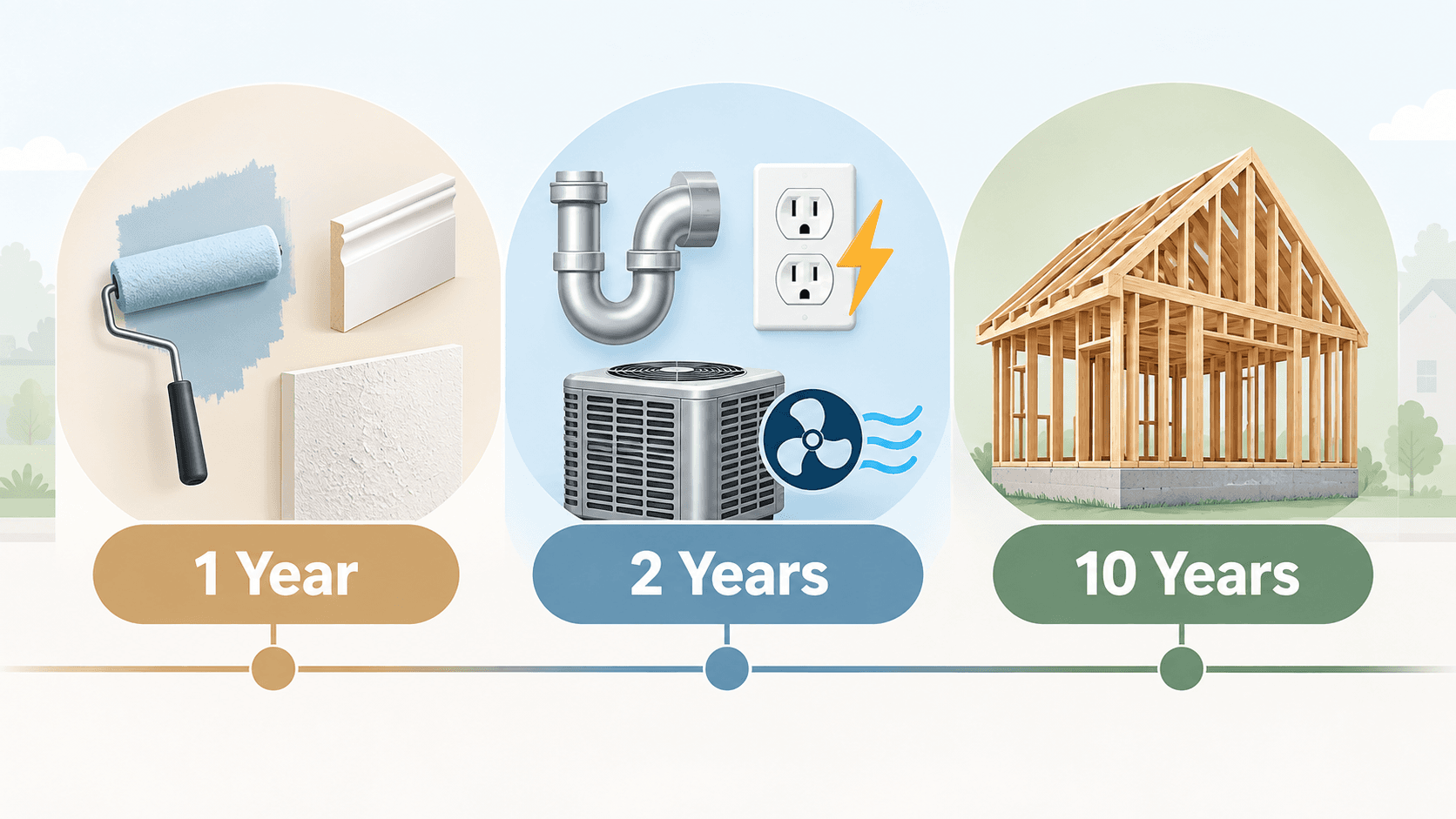
A 1-2-10 builder warranty is a common new-home warranty structure with three separate coverage periods. The “1” often refers to workmanship and materials, the “2” to certain home systems, and the “10” to narrowly defined major structural defects. The exact warranty can use different terms, definitions, start dates, and exclusions.
The name is a shortcut, not a promise of complete cover for ten years. Buyers must read the written warranty for the specific home.

What the three numbers usually mean
One year: workmanship and parts
The first tier often applies to seen finishes and installed parts. Depending on the plan, examples may include drywall, paint, trim, doors, windows, cabinets, flooring, siding, stucco, roofing details, caulk, and other parts of the finished home.
The plan may use performance standards. It may state how much movement, variation, cracking, or adjustment is allowed. It may give the builder the right to repair, replace, or touch up an item.
One-year cover does not mean the home must stay visually perfect. Normal drying, wear, owner damage, poor upkeep, and conditions within the written standard may be excluded.
Two years: delivery systems
The second tier often applies to parts of the electrical, plumbing, heating, ventilation, and air-conditioning delivery systems. The plan may define covered lines, wiring, ducts, pipes, and installed components.
An installation defect may be treated differently from a clogged drain, dirty filter, owner-added wiring, damaged fixture, or failed appliance part. Read how the document separates systems from products and homeowner care.
Ten years: major structural defects
The longest tier often applies only to a defined major frame defect. The plan may require failure of a listed load-bearing element and a serious effect on the home's safety or use.
Covered elements may include certain foundations, beams, columns, load-bearing walls, floor framing, or roof framing. The exact list varies. Small finish cracks, nail pops, tile cracks, and door adjustments are not automatically structural claims.
The new construction home warranty coverage guide gives more detail on common coverage and exclusions.
Why “ten-year warranty” can be misunderstood
A buyer may hear “ten-year warranty” and expect the builder to repair any problem for a decade. That is often not what the document says.
After the early tiers end, finishes and systems may no longer have builder cover. Manufacturer warranties, a service contract, homeowners insurance, or owner funds may address other events. The ten-year tier can remain while applying only to a narrow frame definition.
Ask the builder to show the section for each tier. Do not rely on a sign in the sales center or a short brochure.
The written meaning controls
Read these parts closely:
who provides each tier.
start date.
covered components.
written standards.
limits.
owner care duties.
emergency steps.
claim method.
response and access rules.
remedy choices.
transfer rules.
mediation or arbitration terms.
The builder may handle the first two tiers, while a third-party plan company handles the structural tier. Save contact information for both.
The builder plan length guide explains how to turn these sections into calendar reminders.

Cases by tier
Cases are useful only as a reading guide. They do not decide cover.
Possible first-tier cases
a door that will not latch because it is out of adjustment.
missing caulk at a listed joint.
cabinet doors that do not align within the standard.
paint or drywall work outside the stated finish standard.
flooring installed with a covered work issue.
Possible second-tier cases
a leak tied to covered plumbing installation.
a circuit problem tied to covered power work.
a duct or distribution issue within the covered HVAC system.
another listed system failure caused by covered build work.
Possible frame-tier cases
failure of a listed load-bearing part.
shift that meets the plan's major-defect meaning.
a covered frame condition that seriously affects safe use.
The symptom alone is not enough. The firm may inspect, review plans, request care records, and apply the contract meaning.
What is often not covered
The plan may exclude:
normal wear.
owner damage or alteration.
failure to maintain the home.
pests.
storms, flood, or other events handled elsewhere.
personal property.
hotel, moving, food, or loss-of-use cost.
maker-covered products.
landscaping or irrigation not listed.
small cracks or shift within the written standard.
claims sent after the deadline.
unapproved repairs that prevent inspection.
The Federal Trade Commission explains that new-home plans are limited and often exclude out-of-pocket costs caused by a defect or repair. It also tells owners to check the written terms and keep claim records.
How the 11-month review fits
The end of a possible first-year tier is an important planning point. Many owners review seen issues and open tickets before that date. Some hire an independent inspector.
The 11-month warranty inspection guide explains the process. An inspection report can describe visible issues. It does not decide which tier applies.
Report urgent items when they appear. Do not save an active leak, power danger, fast shift, or unsafe condition for a future checklist.
Builder warranty versus home warranty
A 1-2-10 warranty is tied to new construction. A home warranty sold to a consumer is generally a service contract for listed appliances and systems under a separate agreement.
The builder plan versus home plan comparison explains the difference in provider, cost, claim path, and cover.
A service contract does not extend the structural tier. It may also exclude build defects or pre-existing issues. Read both documents before buying added cover.

How to file a strong claim
Find the correct tier and meaning.
Confirm the start and end date.
Describe the symptom, room, and first date seen.
Add wide and close photos.
State any urgent risk and step taken to prevent more damage.
Submit through the required portal, email, or form.
Save the confirmation number and time.
Record inspections, visits, and repair results.
Ask for any denial and contract section in writing.
The common new build defects article can help an owner describe the area and symptom without guessing at the cause.
What if the builder and warranty company disagree?
Ask each party to identify the section that assigns responsibility. A builder may say a claim belongs to the structural administrator. The administrator may say it remains a work issue. Written responses help the owner see the gap.
The plan may provide review, mediation, or arbitration steps. Follow deadlines. If the issue is major or a legal right may be affected, speak with a qualified Florida attorney.
Florida Statutes Chapter 558 has a separate notice-and-opportunity-to-repair process for certain completed construction-defect claims. It is not simply another name for a plan ticket. Do not try to use a formal legal process without legal guidance.
Questions to ask before closing
Is this a true 1-2-10 structure?
Who backs each tier?
What exact date starts cover?
Can I see the written standards now?
Is one first-year list required?
How are urgent claims reported?
Which products use maker cover?
Does the structural coverage transfer?
Are mediation or arbitration required?
Where do I keep proof that a claim was timely?
For a builder-specific example, the D.R. Horton plan guide shows how one brand may describe its own tiers and claim process.
Read the tier chart from left to right
Make a small chart with three rows: early finish work, home systems, and major frame issues. Put the start date, end date, claim link, and contact beside each row. Then add a note for products that use a maker's plan instead.
This chart helps when a problem touches more than one tier. A water mark may come from a pipe, roof detail, window, or owner change. Report the symptom first. Let the builder or expert inspect the cause. Do not force the item into a tier before the facts are known.
Keep old tickets on the chart even after they close. If a symptom comes back, the first report date and repair history may matter. A clean timeline is easier to share than a long set of emails.
Common Questions
Does a 1-2-10 plan cover the whole home for ten years?
No. The ten-year tier often applies only to defined major structural defects. Other cover may end after one or two years.
What is normally covered in the first year?
Work and parts may be covered under written standards. The exact parts, tolerances, limits, and remedies vary.
What systems may have two-year cover?
Some plans include defined plumbing, power, heating, ventilation, and cooling delivery systems. Read the component list.
Is every foundation crack a structural claim?
No. The crack must be reviewed under the plan's meaning and standard. Report major or changing issues promptly.
Who handles the ten-year tier?
The builder may handle it, or a third-party plan firm may administer it. The plan names the responsible party.
Can a 1-2-10 plan transfer to another owner?
Transfer rules vary. The document may require notice, a fee, or other steps. Some tiers may transfer differently.
Read all three tiers before closing
National House Search helps Florida new-construction buyers organize plan terms, inspections, closing documents and builder questions. Call 561-704-0091 or schedule a buyer consultation to build a clear coverage timeline for your new home.