End Unit Townhouse: Is It Worth It Over an Interior?
In this article
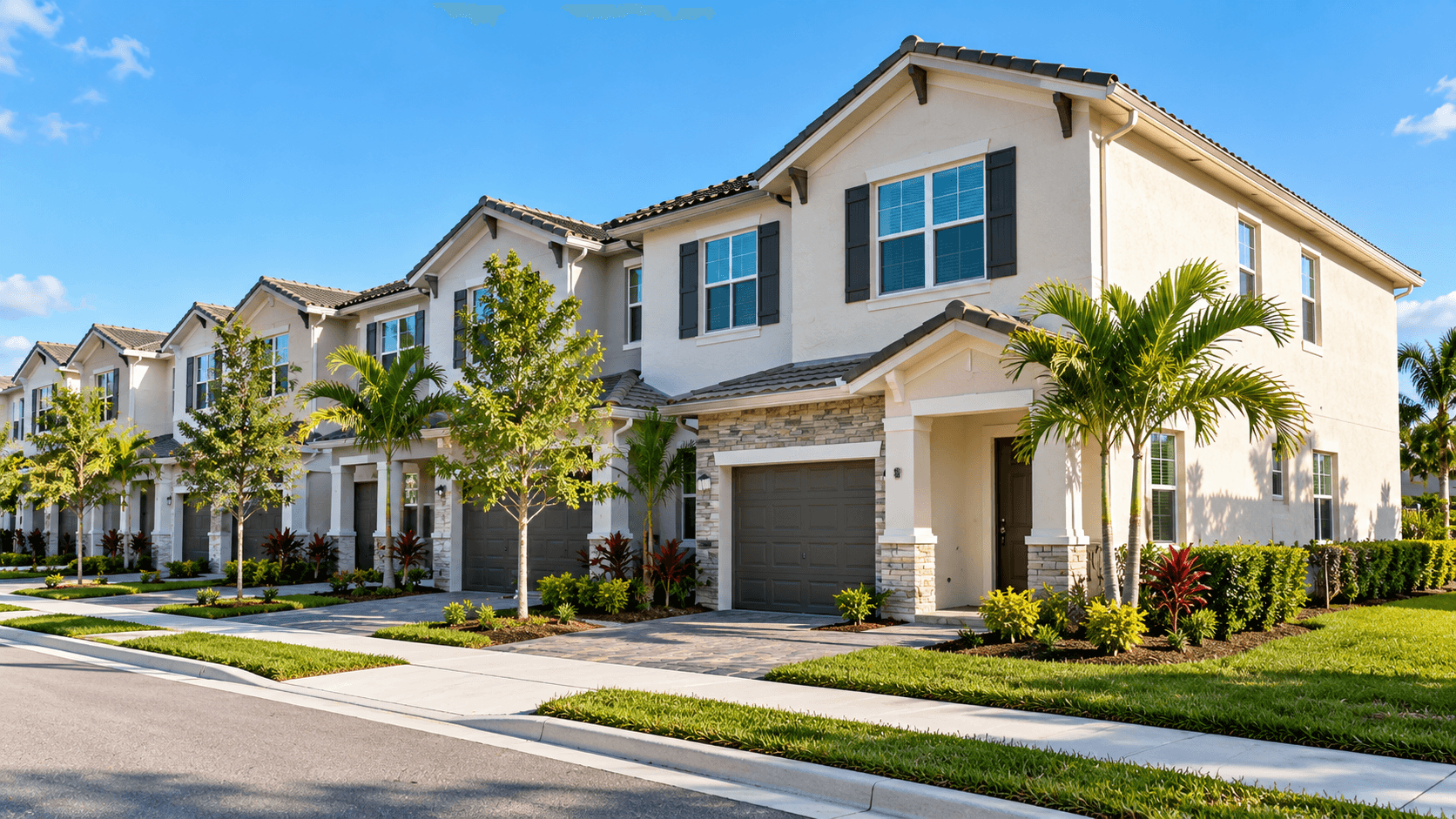
"An end unit townhouse is the home at the end of a row of townhomes. It shares a wall with one neighbor instead of two. An interior unit sits in the middle and shares walls on both sides. That one difference can change light, privacy and price. This guide explains what an end unit townhouse is, what you may gain and lose, and how to decide.
We also use Creekside as an example. Creekside is a new D.R. Horton townhome community at 8100 Cobblestone Dr. in Fort Pierce, and it offers both a Pearson End Unit and a Pearson Interior Unit.

What is an end unit townhouse?
A townhouse row is a line of homes built side by side. Each home has its own front door and its own stairs. Most townhomes share side walls with the homes next to them.
The homes at each end of the row have only one shared wall. On the other side is the outside. That is what makes it an end unit.
Everyone in the middle of the row is an interior unit. They share a wall on both sides.
What an end unit may give you
These are common points, but they are not promises. Every community is different, so ask about the exact home.
One less shared wall. That can mean less sound from next door on one side.
More windows. Because one side faces outside, some end units have extra windows. That can mean more daylight. Ask to see the plan.
More privacy on one side. You have one neighbor on a side instead of two.
A different look. An end unit shows a side to the street or the open space. Some buyers like that.
What an end unit may cost you
A higher price. End units often cost more than interior units of the same size. Ask what the gap is today.
More outside wall. A wall that faces outside takes in more sun and weather. That can change how a home feels in summer.
More to look at from the street. The side of the home is visible, so some owners care more about how it looks.
Again, these are common points and not facts about every home. The plan drawing and the site plan tell you what is true for one home.

Interior units have their own strengths
An interior unit is not a second choice. It has its own plus points.
Often a lower price. Interior homes are often the lower-priced choice.
Shared walls on both sides. That means fewer outside walls.
The same layout. In many communities the rooms are laid out the same way.
So the answer is not ""end is better."" It is ""end is better for some people.""
Imagine two buyers
Picture two buyers looking at the same community.
The first buyer works from home and likes to have a sunny spot for a desk. She asks about an end unit because she wants more daylight and one fewer shared wall. She is willing to pay more if the home really is brighter. So she walks both homes, compares them, and asks for the price gap in writing.
The second buyer is a first-time buyer with a tight budget. He wants the lowest price in the community. He looks at an interior unit first. When he sees that the layout is almost the same, he is happy to skip the extra cost.
Both made a good choice. They started from what mattered to them. That is the whole trick.
Questions to ask the sales team
When you tour, bring a short list. Good questions to ask about an end unit include:
Which homes in this community are end units?
What is on the open side of the home, such as a road, a lawn or a pond?
Does the plan have extra windows on the side wall? Can I see the drawing?
What is the price gap between the end and an interior home today?
Does the end unit have any different features, or is it the same layout?
What are the next steps if I want to reserve one?
Write down what you hear. Then ask us to confirm it with the builder.
What to do next
If you are early in your search, start with the basics. Decide if a townhome fits your life. Then decide if you want an end or an interior. If you are not sure, walk both.
How to decide
Try these questions in order.
What matters more, price or light? If price, start with an interior. If light and privacy, ask about an end.
Do you work from home or have a light sleeper? Sound may matter more.
Do you want a view? An end unit may face open space. Ask what is next to it.
Will you visit both? Always walk both. Photos do not show how a room feels.
What is the price gap? Ask in writing, then decide if the extra space or light is worth it to you.
If two homes are close, the honest answer is usually ""go see both."" A showing makes the choice clear.
Creekside as an example
Creekside has two plans with the same basics. Both are two-story townhomes with three bedrooms, two and a half baths and a one-car garage. The Pearson End Unit is listed at about 1,463 square feet. The Pearson Interior Unit is listed at about 1,464.
So the plans are the same size for real-world purposes. The difference is where the home sits in its row. We walk through both in our post on the Pearson End Unit and Interior Unit.
The builder's pages do not tell us which homes are end units or where they sit. We do not have the Creekside site plan. So if you care about one or the other, ask us to find out which homes fit and what is next to them.
Another D.R. Horton townhome community in St. Lucie County is Central Park Townhomes in Port St. Lucie. It is worth a look if you want to compare.
Things to check on any townhome
Whether you pick an end or an interior, run through this list.
Which way does the front of the home face?
What is next to the home?
Where is the garage, and how many cars fit?
Where are the bedrooms and the laundry?
What is the warranty? D.R. Horton lists a one-year workmanship warranty, a two-year systems warranty and a ten-year structural warranty. Ask for the written terms.
What is the total monthly cost? See our post on closing costs in Florida for the cash side.
Which schools serve the address? See how to check in our guide to St. Lucie County schools.
What is daily life like nearby? Read about living in Fort Pierce, FL.
Common Questions
What is an end unit townhouse?
It is the townhome at the end of a row. It shares one wall with a neighbor instead of two. The other side faces the outside.
Is an end unit townhouse better than an interior unit?
Not always. An end unit may offer more light and privacy. An interior unit often costs less. The best pick depends on what matters most to you.
Do end unit townhouses cost more?
They often do. The gap depends on the community and the plan. Ask for today's difference in writing.
Do end units have less noise from neighbors?
They share one wall instead of two, so they may hear less from neighbors. Build quality and layout also matter. Walk the home and listen.
Does Creekside have end units?
Yes. Creekside offers a Pearson End Unit and a Pearson Interior Unit. Both have three bedrooms, two and a half baths and a one-car garage.
How do I find out which Creekside homes are end units?
Call us. We can ask the builder which homes are end units and where they sit. Call 561-704-0091 and we will help.
Want to see both plans at Creekside? Call Simon Karim at 561-704-0091 or schedule a Creekside visit.
Related reading: Pearson End Unit vs Interior Unit | Closing costs in Florida | St. Lucie County schools | Living in Fort Pierce | Creekside community page "