Cooktop vs Range: How the Kitchens Work at Canter
In this article
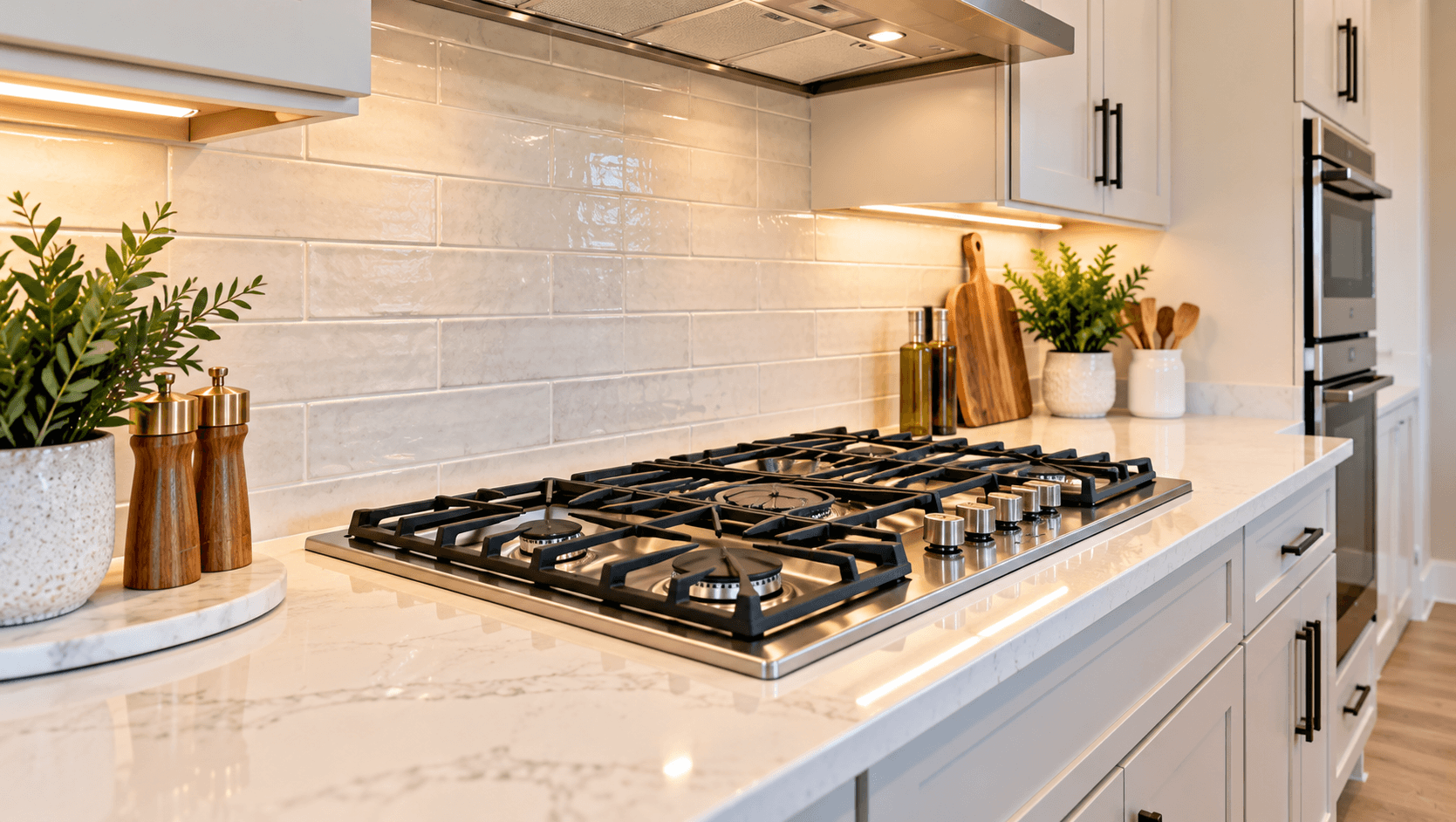
A range is one appliance: a cooktop on top and an oven underneath. A cooktop sits by itself in the countertop, and the oven goes somewhere else, often in a wall cabinet. At Canter in Wellington, every plan uses the second setup. DiVosta's standard features list includes ""Built-In KitchenAid stainless steel appliances including; 36"" gas cooktop, 30"" wall oven/microwave combo, dishwasher and 36"" refrigerator."" Here is how a cooktop vs range compares, and what that choice means in a Canter kitchen.

Cooktop vs Range: The Simple Difference
Maytag, the appliance brand, explains a range this way: ""It combines a stovetop, also called a cooktop, and an oven."" MasterClass calls it ""a multi-function cooking appliance that features a rangetop for heating pots and an oven directly beneath it.""
A cooktop is just the cooking surface. Maytag says, ""A cooktop is the flat, open surface you sear and sauté on that does not have an oven below it."" It also says ""cooktops drop into a countertop cutout from the top.""
Range | Cooktop plus wall oven | |
|---|---|---|
Number of appliances | One | Two |
Oven location | Under the burners | In a wall or cabinet, at a separate spot |
Installation | ""A simple, single appliance installation"" (Maytag) | Two installations |
Layout freedom | Burners and oven stay together | Each can go where it works best |
Cost | Usually less | Maytag says it ""costs more, generally"" |
The Pros of a Cooktop and Wall Oven
More layout freedom. Maytag says a cooktop ""fits into a variety of kitchen layouts, as the cooktop and wall oven can be placed in different locations."" The cooktop can sit in a long counter run, and the oven can sit nearby at a better height.
Less bending. A wall oven is usually mounted higher than a range oven. Lifting a heavy pan in and out is easier when you do not have to bend down to the floor.
Cabinet space under the cooktop. With no oven below, the space under the burners can hold drawers or cabinets, depending on the design.
A clean, built-in look. A cooktop sits in the counter, and a wall oven lines up with the cabinets.
The Trade-Offs
Cost. Maytag says a cooktop and wall oven ""costs more, generally, because of the need for two appliances and two installations."" At Canter, both are part of the standard features list, so you do not choose between them. But if you ever replace them, you are buying two appliances.
Harder to change later. MasterClass says cooktops ""tend to be more permanent since they require a countertop cutout that cannot be patched over."" If you later want a bigger or smaller cooktop, it has to fit that same opening, or the counter has to change.
One oven, unless you add more. Canter's list names one ""30"" wall oven/microwave combo."" If you bake for a crowd and want two full ovens, ask the design center what options exist.

The Full Canter Kitchen
Here is the rest of the kitchen from DiVosta's standard features list for Canter, checked October 16, 2026:
""Upgraded MasterBrand® 42"" Cabinets with crown.""
A 36-inch gas cooktop and a 30-inch wall oven and microwave combo, both built-in KitchenAid stainless steel
A dishwasher and a 36-inch refrigerator
""Sterling® stainless steel 50/50 undermount kitchen sink""
""Silestone and Sensa 3cm countertops""
""Moen® chrome kitchen faucet with pull-out sprayer""
""Pantry with shelving system""
If you want to know more about the countertop brand, our guide to what Silestone countertops are explains it.
DiVosta's photo labels add more detail by plan. The Oakley shows a ""Built in Kitchen with Cafe Attached,"" and the Livingston II shows an ""Oversized Gourmet Kitchen."" The Oakley's captions also show a ""Cafe Space""; ask how it is laid out in your plan. We explain how a café area works in the café and breakfast nook in DiVosta plans.
Gas Cooking: What to Know
Canter's cooktop is gas, and the laundry list also names a ""Whirlpool washer and gas dryer."" So the homes are set up for gas service. Before you buy, ask:
Which company provides gas service, and how billing is set up.
Whether the cooktop has a range hood that vents outside or one that recirculates.
What the burner layout is on the 36-inch cooktop, and whether there is a larger burner for big pots.
Some buyers prefer induction cooking. If that matters to you, ask the design center whether an induction cooktop can replace the gas cooktop, and what it would cost.
Planning Around a Cooktop
A few simple layout points make a cooktop kitchen easier to use every day:
Leave landing space. Keep clear counter on both sides of the cooktop for hot pans and prep bowls.
Keep the oven close. Ask where the wall oven sits in your plan, and picture carrying a hot dish from it to the counter.
Think about the island. If guests sit at the island, ask how far the cooktop is from the seats.
Plan the drawers. Use the space near the cooktop for pots, spices and utensils so you are not walking back and forth.
Light the work zone. Ask whether the hood has its own lights, and where the ceiling lights fall over the cooktop.
Bring a tape measure to the model and check the counter space around the burners yourself. Then open the drawers and cabinets nearest the cooktop, since that is where you will reach most while you cook.
Which Setup Fits How You Cook?
A cooktop and wall oven suit you if:
You cook often and want a long counter run around the burners.
You want the oven at waist height.
You like the built-in look.
A range suits you if:
You want the lowest cost to replace later.
You want to swap appliances easily without changing the counter.
You have a smaller kitchen.
At Canter, the cooktop and wall oven come standard. The bigger kitchen choices are likely the finishes and layout options, so ask the design center.
Tall Ceilings Change the Kitchen Too
Canter's features list says ""11'4"" ceilings all plans 1st floor."" Tall ceilings can affect how high the cabinets go, how the range hood is mounted and how the lighting is placed. We cover that in how tall ceilings change a kitchen. The full features list, the roof and the warranty are in the full standard features and warranty. Upstairs, the Livingston II also offers a second spot for drinks and snacks, which we cover in the Livingston II's optional loft wet bar. Browse each Canter plan's kitchen photos on NHS.

Common Questions
What is the difference between a cooktop and a range?
A range has a cooktop and an oven in one appliance. A cooktop sits in the counter by itself, and the oven goes somewhere else.
Do Canter homes have a range or a cooktop?
A cooktop. DiVosta's features list includes a 36-inch gas cooktop and a separate 30-inch wall oven and microwave combo.
Is a cooktop and wall oven more expensive than a range?
Generally yes, because it is two appliances and two installations, according to Maytag. At Canter both come standard.
Can I change the cooktop size later?
It is harder. MasterClass notes the countertop cutout cannot be patched over, so a new cooktop needs to fit the same opening.
Are the kitchen appliances included?
Yes. The features list includes built-in KitchenAid stainless steel appliances: the cooktop, wall oven and microwave combo, dishwasher and 36-inch refrigerator.
Is the cooktop gas or electric?
Gas, according to DiVosta's standard features list.
Want to stand at the cooktop and see if the layout fits how you cook? Call 561-704-0091 or schedule a time to tour Canter. We can compare the kitchens in each plan during one visit.
Related reading: High ceilings at Canter · Canter's concrete tile roof and included features · What a wet bar adds to the Livingston II loft