How to Find Out What's Currently for Sale at Vintage Oaks
In this article
There is no public, always-current list of exactly which homes are for sale at Vintage Oaks right now—and any website that shows you one is showing you old information. What you can know for certain: D.R. Horton regularly releases new Emerald Series townhomes here across all four floor plans, and the fastest way to get today's real numbers is a phone call.

Why nobody can post a truly live list
Builders release and sell homes constantly. A home available this morning can be under contract by evening. There is no public feed that updates a website automatically every time a home sells or a new one opens up.
Any "current inventory" table you see on a website is a snapshot from whenever someone last typed it in. By the time you read it, some homes are gone and new ones have appeared.
What has stayed true over time
Some things about Vintage Oaks don't change week to week, even while the specific homes do.
There are four floor plans: the Abingdon, Banbury, Callington, and Dawley, ranging from about 1,640 to 1,871 square feet. See our Abingdon vs. Banbury comparison for the real differences between two of them.
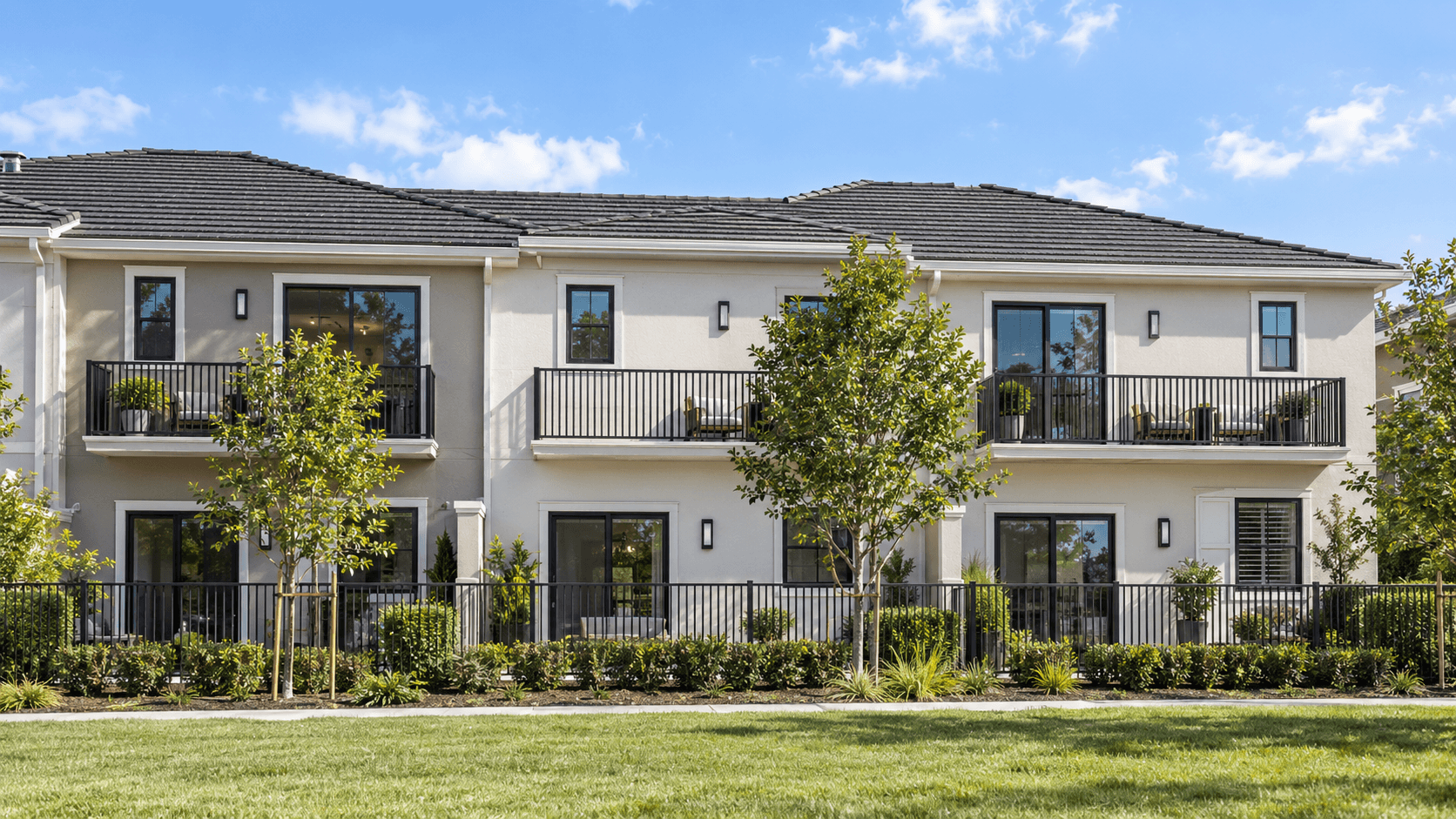
Every home, regardless of plan, includes a fenced yard and a balcony off the second-floor primary bedroom. That doesn't change as inventory turns over.
Homes are usually available at more than one construction stage at once—some finished, some still being built.
What the construction stages mean

Builder lists describe homes using construction terms that aren't obvious if you haven't bought new construction before.
Early construction stage. Foundation and framing are underway, but the home is far from finished—no fixtures, no flooring, no cabinets. A home at this stage is months from move-in.
Interior work underway. Plumbing and electrical are going in; drywall may be up, but flooring, cabinets, and paint aren't complete.
Substantially complete. The home looks essentially finished and is close to being cleared for occupancy.
Certificate of occupancy received. The local building department has confirmed the home is safe and legal to live in—the finish line for construction, and as close to move-in ready as new construction gets.
See our move-in-ready guide for more on how to read these stages.
Three different prices, and why it matters
The starting price is the lowest price the builder advertises for a floor plan—the base version, cheapest lot, nothing added.
The price of a real home is what one specific address costs, including its lot and whatever is already built in.
The price after a deal is what you pay once any builder incentive is applied—these have rules and expiration dates.
Always ask which one you're being quoted.
What you pay beyond the purchase price
Every month you also pay property taxes, homeowners insurance, and HOA dues. In South Florida, insurance is a serious line item that varies by home.
Property taxes on a new home deserve special attention—the prior tax bill was based on empty land, not a finished house. Ask your lender to estimate based on the finished home's value. Read what to bring to a payment review before setting your budget.
What happens once you find a home you want?
Finding an available home is only the first step. Builders typically ask for a deposit to hold a specific home for you while you move toward a full contract—sometimes called a reservation. This is different from your full earnest money deposit later, and the rules around it vary. Ask specifically what the hold gets you, how much it costs, and what happens if you decide not to move forward.
From there you move into the purchase contract itself, which starts the clock on financing, inspection windows, and any contingencies you've negotiated. A home that's already finished tends to move to contract and closing faster than one still under construction, simply because there's less waiting on the building side.
If you're moving fast because a specific home at Vintage Oaks is in demand, having your pre-approval already in hand before you tour puts you in a position to act the same day instead of losing a home while you scramble for paperwork.
How to make the call worth it

When you call for today's list, come prepared. Know which of the four plans interests you, or that you're still deciding—our floor plan comparison can help narrow that down first. Know your rough budget and timeline.
Call Simon Karim at 561-704-0091, or schedule a visit online. You'll get the actual current addresses, prices, and construction stages—not a snapshot from whenever a webpage was last updated.
Not sure which floor plan yet?
Read our Abingdon vs. Banbury comparison first. If you're still comparing communities entirely, our Palm Beach Gardens buyer's guide covers what else is out there, including how Vintage Oaks compares near the Avenir development.
Common questions
Is there a website with the current list of homes for sale at Vintage Oaks?
Not a truly live one. Inventory changes too often for any website to track automatically. Call for the real, current list.
How many floor plans does Vintage Oaks have?
Four — Abingdon, Banbury, Callington, and Dawley, ranging from about 1,640 to 1,871 square feet.
How do I find move-in ready homes specifically?
Ask for homes with a certificate of occupancy when you call — the construction stage closest to truly move-in ready. See our move-in ready guide.
Are estimated completion dates on unfinished homes guaranteed?
No. They're projections that can move due to weather, inspections, or supply delays.
Do prices go up as the community sells out?
Often, but not always. Builders adjust prices as phases open and close. Don't assume prices only move one direction.