SEER Rating Explained: The 15 SEER Air Conditioning in Brystol Homes
In this article
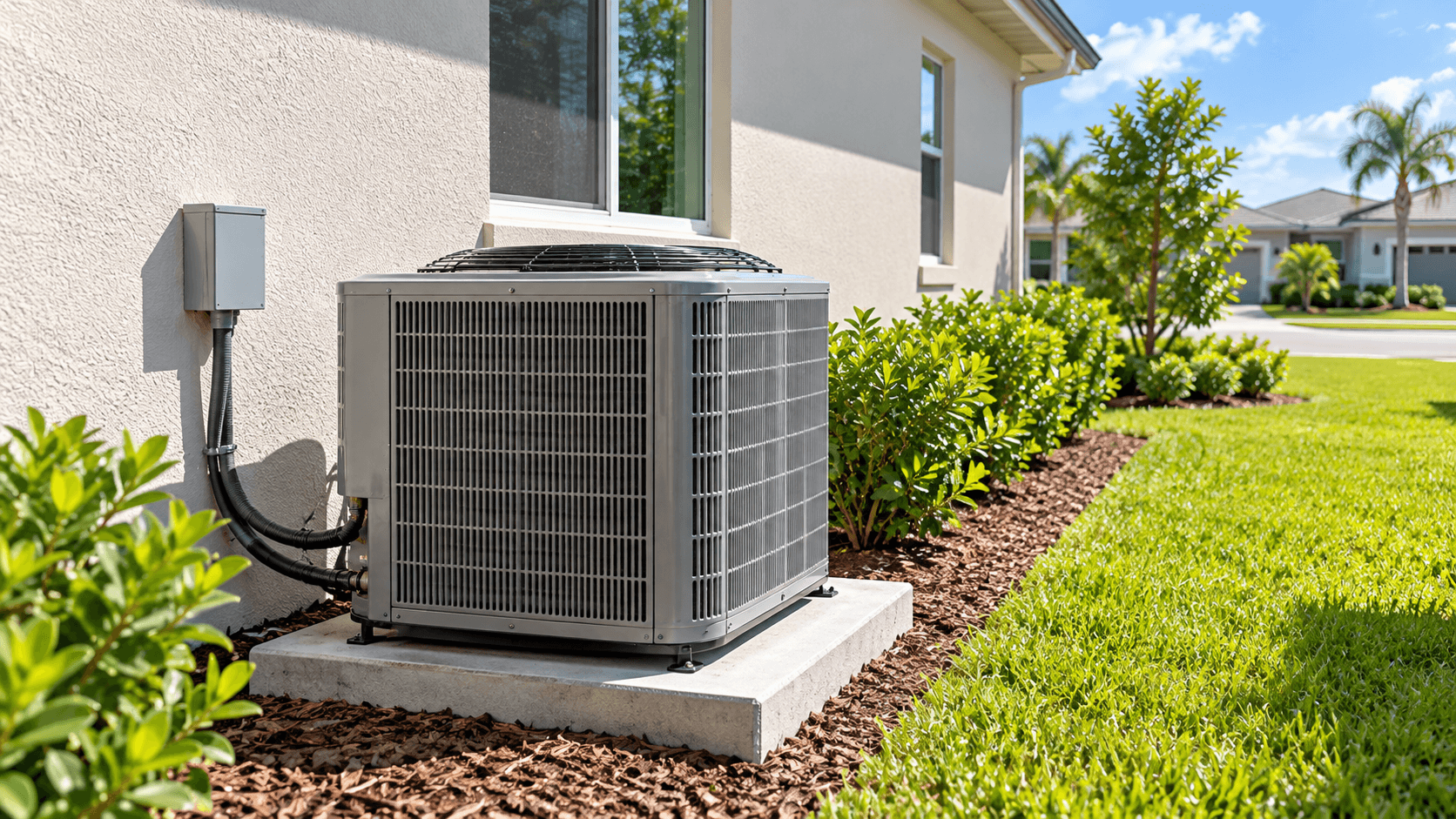
A SEER rating tells you how efficiently an air conditioner cools over a whole season, and a higher number means it uses less electricity to do the same job. Lennar's included-features list for Brystol at Wylder names a ""High efficiency 15 Seer central air conditioning and heating"" system. This guide explains what that number means, how it compares with the federal rules for Florida, and what to ask before you buy.

What a SEER Rating Measures
SEER stands for seasonal energy efficiency ratio. The U.S. Department of Energy defines it as the total heat an air conditioner removes from your home over the cooling season, divided by the total electricity it uses in that same season.
The Department of Energy puts the takeaway in one line: ""The higher the SEER rating, the less electrical energy your air conditioner uses to cool your home."" It also notes that a higher-rated unit ""could be more expensive but will save you money on your electricity bill.""
Think of it like miles per gallon for a car. Two cars can both get you to work, but the one with better mileage uses less fuel on the way.
SEER vs SEER2: Why There Are Two Numbers
On January 1, 2023, the Department of Energy changed how central air conditioners are tested. The new ratings are called SEER2, along with EER2 and HSPF2 for other measures. The Department of Energy says these new numbers ""better reflect real-world installation and use.""
Here is the part that trips people up. The Department of Energy says SEER2 ratings are ""similar to ratings using the original metrics,"" but ""they are not directly comparable."" So a 15 SEER rating and a SEER2 rating are measured in different ways. You cannot simply line one up against the other.
Lennar's list for Brystol uses the older SEER name. When you visit, ask what the SEER2 rating is on the actual unit going into your home. It should be on the unit's label and its paperwork.
The Federal Minimum in Florida
The Department of Energy splits the country into regions for air conditioner rules. Florida is in the ""hot-humid"" Southeast region. For split-system central air conditioners installed in the Southeast on or after January 1, 2023, the minimums are:
Unit size (cooling capacity) | Minimum SEER2 in the Southeast |
|---|---|
Less than 45,000 Btu per hour | 14.3 |
45,000 Btu per hour or more | 13.8 |
The Department of Energy also says it is illegal for a contractor to install a unit that does not meet the regional standards in the Southeast. You can read the rules in the Department of Energy's 2023 central air conditioner standards FAQ.
What this means for you: any new central A/C installed in a Florida home today has to meet a federal floor. The useful question is how far above that floor the unit in your home sits, measured in SEER2.

How Big a Share of Your Energy Goes to Cooling
The Department of Energy's Energy Saver guide says air conditioning and space heating together ""are the largest energy users in your home, typically making up about 32% of your energy use."" That is why the efficiency of the system, and how you run it, makes such a difference to your bill.
The same guide adds two points that apply to any new home. First, the system should be ""properly sized for your house and installed to deliver its full capacity."" Second, ducts matter: the guide says ducts that leak air into an attic or crawl space ""can add hundreds of dollars a year to your heating and cooling bills.""
You cannot see the ducts once the drywall goes up, so ask about them early, and have an inspector look before the walls are closed if your contract allows it.
Why the Number Matters in a Florida Home
In Florida, the air conditioner runs for much of the year. Small differences in efficiency add up over many months of cooling. A higher-rated system can lower the cooling part of your electric bill, though your actual bill also depends on your thermostat settings, your home's size, sun on the windows and how many people live there.
Efficiency is not the only thing that matters. A unit that is the wrong size for the home, or ductwork that leaks, can waste energy no matter what the label says. That is a question for the builder's HVAC team, not something you can see on a sticker.
Where the A/C Lives in a Brystol Home
Lennar's floor plan drawings for Brystol show an HVAC space in each plan. On the two-story plans, the drawings place an HVAC space on the second floor. The indoor part of a central system is the air handler, and our guide to what an air handler is explains how it works with the outdoor unit.
The Rest of the Cooling Package
The A/C is only one part of how Lennar's homes at Brystol handle heat. The included list also names:
a programmable Wi-Fi thermostat, which we cover in our guide to setting the Brystol Wi-Fi thermostat;
""Non-Impact Low E Windows,"" explained in our guide to the low-E glass in Brystol homes;
ceiling fan pre-wiring in the great room, flex room, bedrooms and lanai, per plan.
Looking After the System
A new air conditioner still needs care. Simple habits help:
Change or clean the filter on the schedule the manufacturer gives. The Department of Energy's Energy Saver guide suggests checking filters once a month or as needed.
Keep the outdoor unit clear of plants, mulch and stored items.
Keep the paperwork. Lennar's list includes ""Manufacturers warranties for A/C, appliances and fixtures."" Save the model and serial numbers and the warranty papers in one place.
Before your builder warranty periods end, it is smart to have the system looked at along with the rest of the house. Our guide to the 11-month warranty inspection explains why many new homeowners schedule one.

Questions to Ask at the Sales Office
What is the SEER2 rating on the unit for this plan?
What size is the system, in tons or Btu per hour?
Is it a straight air conditioner with a heater, or a heat pump?
Who services the system during the warranty, and how do I reach them?
How long is the manufacturer warranty on the A/C?
Where are the air handler and the filter in this plan, and what size filter does it take?
Common Questions
What SEER rating does Lennar list at Brystol at Wylder?
Lennar's included list for Brystol at Wylder names a high-efficiency 15 SEER central air conditioning and heating system.
What does SEER stand for?
SEER stands for seasonal energy efficiency ratio. It compares the heat an air conditioner removes over a cooling season with the electricity it uses.
Is a higher SEER rating better?
For energy use, yes. The Department of Energy says the higher the SEER rating, the less electricity the unit uses to cool your home.
What is SEER2?
SEER2 is the rating from the testing method the Department of Energy began using on January 1, 2023. It is not directly comparable with the older SEER number.
What is the minimum SEER2 in Florida?
For split-system central air conditioners installed in the Southeast since January 1, 2023, the minimum is 14.3 SEER2 for units under 45,000 Btu per hour and 13.8 SEER2 for larger units.
Does the A/C come with a warranty?
Lennar's list includes manufacturer warranties for the A/C, appliances and fixtures, along with its 1-2-10 home buyer's warranty. Ask for the written terms.
Get the A/C Details in Writing
Ask us to pull the SEER2 rating and system size for the plan you like. Call 561-704-0091 or request a Brystol at Wylder appointment, and we will help you get the answers before you sign.
Browse every plan on the Brystol at Wylder community overview.
Related reading: Wifi Thermostat Basics: The Programmable Thermostat in Every Brystol Home; Low E Windows at Brystol at Wylder: What Lennar's Non-Impact Glass Means; What Is an Air Handler? The A/C Closet in a Palm Cay Townhome.