Redland, FL: Farm Country Near Terra Sol
In this article
Redland, FL is an unincorporated farming area in Miami-Dade County, just northwest of Homestead. It is known for tropical fruit groves, plant nurseries and farm stands, and it takes its name from pockets of red clay that sit on top of the area's limestone. Terra Sol, Lennar's townhome community in Homestead, sits just east of Krome Avenue, the main road north into that farm country. That makes the Redland an easy weekend outing.
This guide explains what the Redland is, what grows there, the farm stops worth knowing, and what living near it is like.

What the Redland is
The Redland is not a city. It has no town government of its own. It is an unincorporated part of Miami-Dade County, which means the county handles local services there.
According to its Wikipedia entry, the area's boundaries have been described in different ways over the years. One older description runs from Krome Avenue on the east to the Everglades on the west, and from Eureka Drive on the north to Biscayne Drive on the south. Newer estimates draw it differently, and some extend it farther north and south. In everyday talk, many locals use ""the Redland"" for the farm belt to the west and north of Homestead.
Why it is called the Redland
The name comes from the ground itself. Much of South Florida sits on a type of limestone called oolitic limestone. In this area, pockets of red clay cover that rock. Early settlers named the area for the red soil.
That soil and the warm climate let farmers grow crops that are hard to grow anywhere else in the continental United States.
What grows there
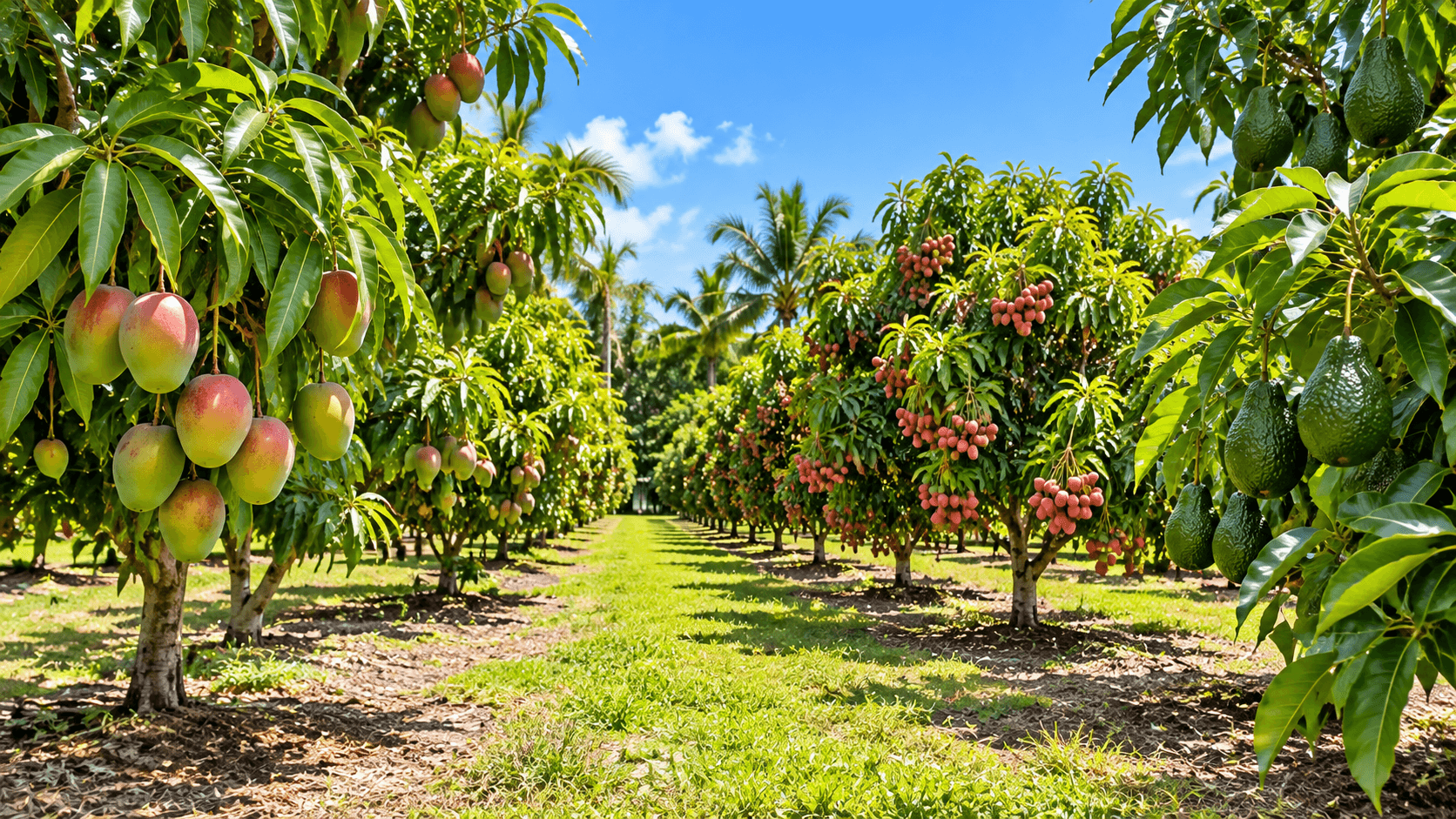
Wikipedia describes the Redland as a large farming belt known for tropical fruit. Crops include:
Avocados, the largest commercial crop
Mangoes
Guavas
Lychees
The area also has many ornamental plant nurseries, especially for orchids. Drive the back roads and you will pass groves, shade houses and roadside fruit stands.
Crops are seasonal. What you can buy in the summer is different from what you can buy in the winter. That is part of the fun.

Farm stops worth knowing
These are real, long-running places in and around the Redland. Hours and seasons change, so check each one before you go.
Fruit & Spice Park. This is a county park dedicated to plants from around the world. Miami-Dade County says it grows more than 500 varieties of fruits, vegetables, spices, herbs and nuts. It is at 24801 SW 187th Avenue. See the Fruit & Spice Park page for hours and fees.
Robert Is Here. This fruit stand began in 1959, according to its own website, when a young boy named Robert sold cucumbers by the roadside. Today it sells hundreds of fruit varieties, many of them grown locally, and it is famous for fresh fruit milkshakes. It also has a free petting area with goats and other animals. It sits on SW 344th Street, also called Palm Drive. Check the Robert Is Here website for hours.
Schnebly Redland's Winery. This family-owned winery makes wine from tropical fruit and describes itself as the southernmost winery in the continental United States. It also has a restaurant and hosts events. See the winery's website for hours and events.
Monkey Jungle. Wikipedia's Redland article lists this long-running wildlife park among the area's attractions. We gave it its own guide: Monkey Jungle: A Local's Guide.
A simple Saturday in the Redland
Here is one easy way to spend a day without going far from Terra Sol. Check every stop's hours first, because they change with the season.
Morning: Fruit & Spice Park. Walk the grounds while it is cooler and see plants you will not find at a garden center.
Late morning: Monkey Jungle. Book a time slot and catch one of the guided shows.
Lunch: Schnebly Redland's Winery. It has a restaurant on site. Plan a driver if you will be tasting.
Afternoon: a fruit stand. Stop at Robert Is Here on the way home for a milkshake and fresh fruit.
That is four very different stops in one corner of the county, all on roads you will drive often if you live in west Homestead.
A little history
The Redland has a long farming history, and storms are part of it. Wikipedia notes that Hurricane Andrew in 1992 destroyed several historic Redland buildings, including the 1906 Redland Schoolhouse and the 1913 Redland Community United Methodist Church. Farm losses from that storm were huge.
The area rebuilt, and the farms are still the heart of it today.
What living near the Redland is like
If you live at Terra Sol, here is what having the Redland close by means in daily life.
Fresh fruit nearby. Farm stands and markets are a short trip away. Many families make a weekend habit of buying fruit straight from the source.
Weekend outings close to home. A fruit stand, a winery and a wildlife park can fill a Saturday without a long trip.
A rural feel next to town. Homestead has shopping, restaurants and services. A few roads west, the landscape turns into groves and nurseries.
Farm traffic on some roads. Back roads can carry trucks and farm equipment, especially during harvest. Krome Avenue is the main north-south road along the edge of the area.
Seasonal rhythms. Some stands close for part of the year. Plan around the seasons.

Getting around
From Terra Sol, the main roads that connect you to the Redland, the rest of Miami-Dade and the Keys are:
Krome Avenue, also known as State Road 997 and 177th Avenue, which runs north along the eastern edge of the Redland.
Palm Drive (SW 344th Street), which runs west toward the farm country and the road to Everglades National Park.
U.S. 1, which runs south to Florida City and then into the Florida Keys.
Heading south for a weekend? Read Homestead to Key West: The Roads.
Schools
We do not name assigned schools or ratings, because assignments can change. Use the Miami-Dade County Public Schools information page and confirm your exact address with the district.
Living at Terra Sol
Terra Sol has four two-story townhome plans from about 1,649 to about 1,804 square feet, each with a one-car garage and a balcony off the owner's suite. Our Terra Sol floor plans guide compares them. Our solid surface countertops guide covers what Lennar includes.
Common Questions
What is Redland, FL?
Redland is an unincorporated farming area in Miami-Dade County, just northwest of Homestead. It is known for tropical fruit groves, plant nurseries, farm stands and a few well-known attractions.
Why is it called the Redland?
It is named for pockets of red clay that cover the limestone beneath much of the area. Early settlers named the area for that red soil.
What grows in the Redland?
Tropical fruit is the big one. Avocados are the largest commercial crop, and mangoes, guavas and lychees are grown too. The area also has many plant nurseries, especially for orchids.
Is the Redland part of Homestead?
No. The Redland is an unincorporated part of Miami-Dade County. It lies northwest of Homestead, and many people who live in Homestead shop and visit there.
What is there to do in the Redland?
Popular stops in and around the Redland include Fruit & Spice Park, the Robert Is Here fruit stand, Schnebly Redland's Winery and Monkey Jungle. Hours and seasons change, so check each one before you go.
How do I find schools near Terra Sol?
We do not name assigned schools or ratings. Use the Miami-Dade County Public Schools website and confirm your exact address with the district.
Want to see Terra Sol and the area around it? Call 561-704-0091 or Visit Terra Sol Near the Redland — Schedule a Visit.
Related reading: Monkey Jungle: A Local's Guide, Homestead to Key West, Terra Sol Floor Plans Compared, Solid Surface Countertops at Terra Sol, and the Terra Sol community page.