What It's Actually Like Buying Into a 69-Home Community Like The Reserve at Tequesta
In this article
Sixty-nine homes. That's the entire community at The Reserve at Tequesta—not 69 homes in one phase of a 900-home master plan, the whole thing. Buying into a community this size is a genuinely different experience than buying into Avenir or Westlake, and it's worth understanding what changes before you tour.

Smaller doesn't mean fewer choices; it means different ones.
With only two floor plans—the Centreville and the Greenville—the decision tree is short. You're not comparing eight plans across four collections, cross-referencing lot premiums against elevation packages across a dozen model types. That's a real advantage if choice overload is part of what makes new-construction shopping exhausting: at The Reserve at Tequesta, you can see everything worth seeing in one visit and walk away with a clear sense of the whole community rather than one corner of it.
What a 69-home community means for amenities
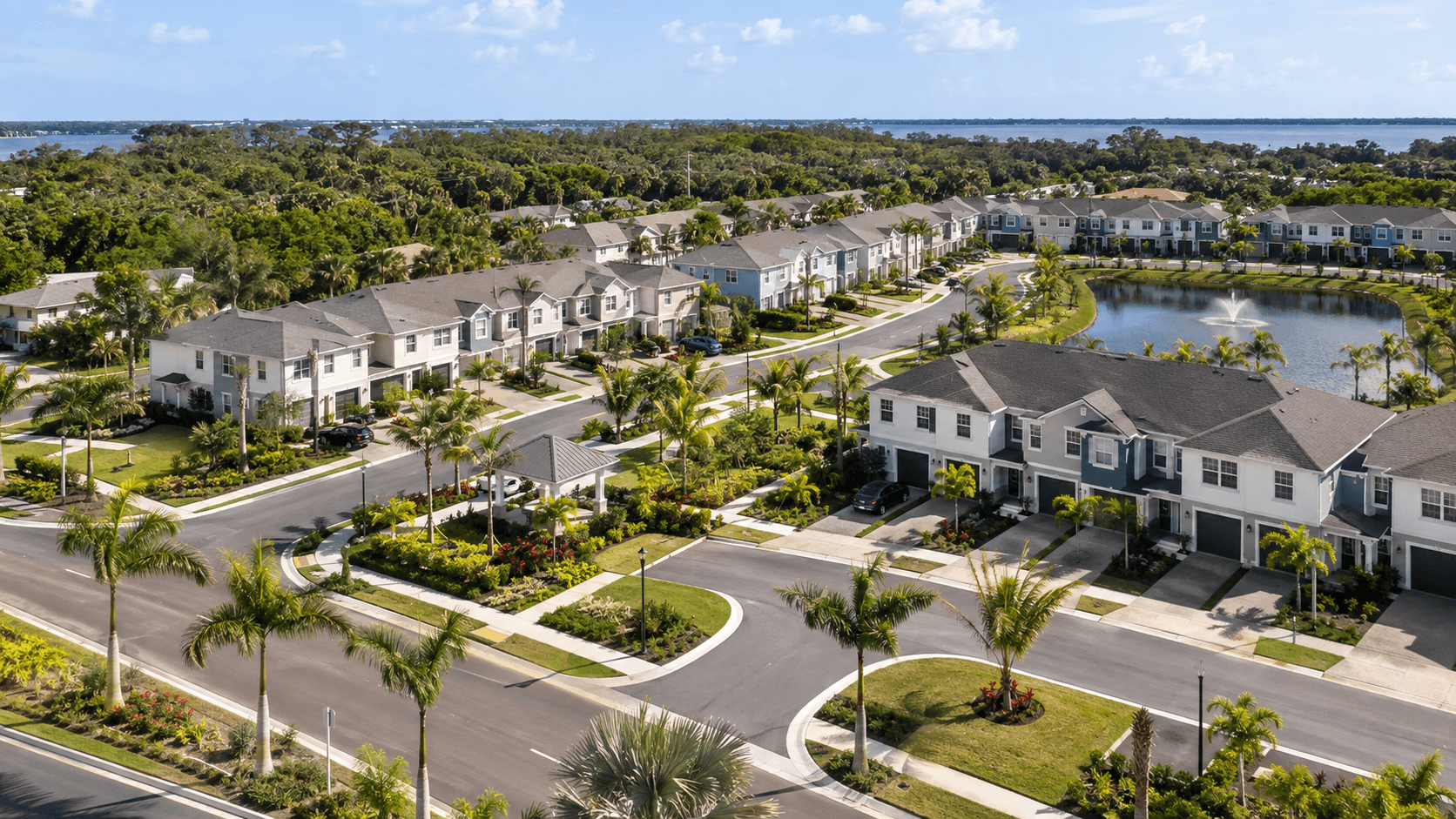
The amenities here—a resort-style pool with a rock waterfall feature, a sundeck, a fitness room, a cabana, a summer kitchen, and a playground—are sized for a community this compact, not stretched thin the way amenities sometimes are in a fast-growing 500-home phase where a single pool serves hundreds of households. Fewer households sharing the pool and fitness room is one of the practical upsides of a boutique count that doesn't always make it into the sales pitch, but it's the kind of thing that becomes noticeable on a Saturday afternoon in season.
What it means for build timing and availability
A 69-home community sells out faster than a master-planned community with thousands of planned units, simply because there's less inventory to sell through. If a specific homesite or plan matters to you—a particular orientation, proximity to the amenities, or one of the higher-demand lots—that argues for touring sooner rather than treating this like a community you can circle back to in six months. Large communities can afford to hold inventory and run incentive cycles for years; a 69-home community works through its supply on a much shorter horizon.
No CDD; HOA does apply.

DiVosta confirms directly that there's no CDD (Community Development District) fee at The Reserve at Tequesta -- a recurring cost some newer Florida communities carry that this one doesn't. An HOA fee does apply; get the current monthly number from the sales team rather than an aggregator site, since it's the kind of figure that shows up wrong on third-party listings more often than it shows up right, and ask what it covers specifically -- amenity maintenance, landscaping, exterior building upkeep -- since HOA scope varies meaningfully between townhome communities.
How governance typically works in a community this size
Smaller HOA communities often have a more direct relationship between homeowners and the association than sprawling master-planned communities do, simply because there are fewer households and fewer layers of sub-associations to navigate. That can mean faster response on maintenance requests, but it can also mean a thinner reserve fund with fewer households sharing the cost of major repairs down the line. Ask about the HOA's reserve funding and any planned special assessments before you close, the same way you would at any HOA community regardless of size.
The trade-off worth naming honestly
A smaller community means a smaller resale pool down the line and less negotiating leverage if you're trying to time a purchase around a specific incentive cycle—big communities run more frequent promotions simply because they're moving more inventory across more homesites. That's a real trade-off, not a reason to avoid a boutique community, but it's worth knowing going in rather than discovering later when it's time to sell.
Who this fits
Buyers who want a straightforward decision—two plans, one location, done—tend to do well here. Buyers who want to compare eight or ten plan options across multiple collections before deciding will find that experience elsewhere, at a larger D.R. Horton or Lennar community in Palm Beach County, not at The Reserve at Tequesta. Neither approach is wrong; it's a question of which kind of shopping experience actually matches how you make decisions.
A quick checklist for evaluating a boutique community
Before touring, it helps to know what you're actually optimizing for. If a short decision process, a more relaxed amenity experience, and a walkable sense of the whole community in one visit matter more to you than maximum plan variety and aggressive incentive pricing, a 69-home community like this one is likely to feel right. If comparing a dozen plans and negotiating against a builder eager to move high volume matters more, a larger community is probably the better use of your time. Neither instinct is wrong—it's worth being honest with yourself about which one actually describes how you shop before you commit a weekend to touring model homes.
How this compares to Water Pointe in scale
Water Pointe in Jupiter, a similarly boutique townhome community about six miles away, runs even smaller at 35 homes total. Both communities share the same basic logic—a limited plan count, a compact footprint, and amenities scaled to match—but Water Pointe's direct Intracoastal location pushes its pricing well above $1.1 million, compared to The Reserve at Tequesta's inland, US-1-corridor position starting under $810,000. If the appeal of a boutique community is the draw rather than the waterfront specifically, The Reserve is the more accessible entry point into that kind of buying experience in this part of the county.
What to ask the HOA before closing, specifically

Beyond the monthly fee itself, ask three things: how the reserve fund is currently funded relative to the community's age, whether any special assessments are anticipated in the next few years, and who handles exterior maintenance versus what falls to the individual homeowner. Those three answers tell you more about the real cost and experience of HOA living here than the headline monthly number alone.
Common Questions
How many total homes are in the community?
69 townhomes, split between the Centreville and Greenville floor plans.
Is this a gated community?
That specific detail wasn't confirmed in DiVosta's published materials -- ask the sales team directly before assuming either way.
Will there be future phases with more plans?
Nothing published indicates additional plans or phases beyond the Centreville and Greenville. Confirm directly with DiVosta if that matters to your decision.
Does a smaller community mean lower HOA dues?
Not necessarily -- HOA dues depend on what the community's shared amenities cost to maintain, not just headcount. Get the current figure and what it covers from the sales team.
Is it harder to resell a home in a small community?
A smaller resale pool can mean fewer comparable sales to price against, which is worth factoring in if resale timing matters to your decision.
Should I ask about HOA reserve funding before buying?
Yes -- in any HOA community, understanding reserve funding and the likelihood of future special assessments is a reasonable question to ask before closing, regardless of community size.
How quickly are homesites selling?
Availability changes regularly in a community this size. Call 561-704-0091 for what's actually open today rather than relying on what a listing site shows.