What's Included at Domaine at SoSo + Pulte Warranty
In this article
Every home at The Domaine at SoSo comes with a gourmet kitchen, impact windows, and Pulte's national 10-year structural warranty. Here's what "included" actually means at this community and how the warranty breaks down year by year.

What's standard in every home?
Both the Marlow and Saltwater plans include:
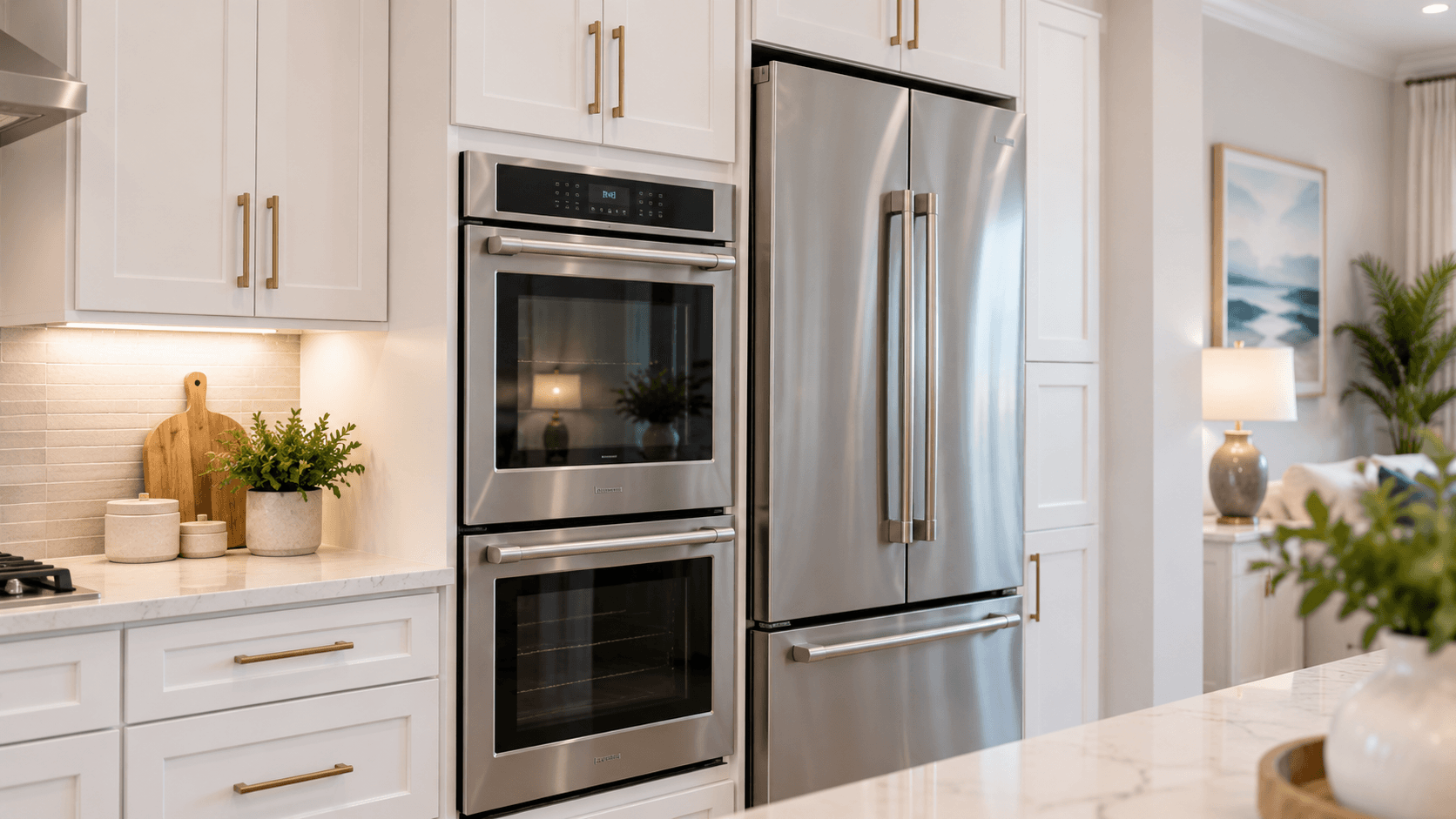
A gourmet kitchen with a 48-inch KitchenAid built-in refrigerator and built-in double oven
Impact windows throughout
8-foot interior doors on the main level
Floor outlets in the main living area
Access to Pulte's design studio to select finishes before closing
The Marlow adds a frameless glass shower enclosure in the primary bath. The Saltwater adds a wet bar at the gathering room. Both plans sit inside a gated community with a shared landscaped courtyard.

The Pulte warranty, explained year by year
Pulte calls this its 1-2-5-10 plan, and it applies to every home the company builds, including The Domaine at SoSo.
Year one: covers general materials and workmanship — the tolerances the home was built to.
Years one and two: covers the plumbing, electrical, heating, and air conditioning systems.
Through year five: covers water infiltration and internal leaks.
Through year ten: the structural elements — footings, load-bearing walls, beams, and roof framing — carry a limited structural warranty.
This is a national standard Pulte applies across every community it builds, not something specific to this one. It's transferable to a new owner if you sell the home within the coverage period.

How it compares to other builders
Different national builders structure their warranties a little differently — some use a similar tiered approach, others bundle coverage differently. If you're comparing new construction across builders, the specific years and what's covered in each tier are worth asking about directly, since the marketing language ("10-year warranty") can sound the same while the fine print differs.
What isn't included?
Design-studio upgrades, HOA dues, and current pricing all vary and aren't part of the base package described here — ask your sales consultant for the current homesite-specific numbers. And, per the builder's own listed features, the community does not currently publish room-by-room floor plan dimensions; that's worth asking about directly if exact room sizes matter to your decision.
What a warranty claim actually looks like
If something covered under the warranty needs attention, the typical process starts with a service request through the builder's warranty portal or customer care line, which then gets assigned to a technician. Coverage timeframes are measured from your closing date, not from when the home was built, so keeping your closing paperwork accessible matters more than people expect—it's the reference point for every warranty conversation you'll have.
Third-party inspections
Beyond the builder's own warranty, it's common for new construction homes to go through independent, third-party inspections at various points during the build—separate from any inspection you hire yourself before closing. Ask your sales consultant what inspections happen during construction here and whether documentation from those inspections is something you can request.
Builder warranty vs. manufacturer warranty
It's worth understanding that the appliances in your kitchen—the KitchenAid refrigerator and double oven included standard—are typically covered by the manufacturer's own warranty, separate from Pulte's structural and systems coverage. If a refrigerator stops cooling in year three, that's usually a KitchenAid claim, not a Pulte one. Keep both sets of documentation, and ask at closing which items fall under which coverage, so you're not guessing later.
Reading the fine print, in plain terms
Warranty documents are written in fairly formal language, but the core question to ask about any covered item is simple: is this a defect in material or workmanship, or is it normal wear and settling? Most warranties, including Pulte's, distinguish between the two—covering genuine construction defects while excluding things like minor hairline cracks from normal settling or damage from a lack of routine maintenance. If you're ever unsure whether something qualifies, the warranty service request process exists specifically to get a professional opinion rather than guessing.
Registering your warranty
New homeowners are typically asked to register with the builder's homeowner portal shortly after closing, which is also where warranty service requests get filed going forward. Keep your login information and closing documents together—it's a small piece of paperwork that saves real time later if you ever need to file a claim.
Keeping your own maintenance records
Even with a strong builder warranty in place, keeping your own simple log of routine maintenance — HVAC filter changes, for example — can matter if a warranty claim is ever disputed on the grounds of insufficient upkeep. It's a small habit that protects you if a claim ever becomes a back-and-forth about whether something failed from a defect or from neglect.
What "limited" means in a limited warranty
Every builder warranty, including Pulte's, is described as a "limited" warranty—meaning it covers specific, defined items under specific conditions, rather than acting as an open-ended guarantee against anything that could ever go wrong with the home. Reading the actual performance standards document, not just the marketing summary, is the only way to know precisely what's covered and what isn't for any given issue.
Why the fine print is worth the read
It's tempting to skim past warranty paperwork at closing, when there's already a stack of documents to sign. But the performance standards define exactly what counts as a covered defect versus normal wear—details that matter enormously if you ever need to file a claim years down the road. Set aside time to actually read it, or ask your closing attorney to summarize the key exclusions in plain language. Ask specifically whether the community has had any documented third-party inspection reports made available to buyers, since builder practices on sharing this documentation vary and it's a reasonable thing to request before closing.
Common Questions
How long is the Pulte warranty?
Structural coverage runs 10 years. Workmanship is covered for 1 year, mechanical systems for 2 years, and water infiltration for 5 years — it's a tiered structure, not one flat 10-year period.
Is the warranty transferable if I sell the home?
Yes, it transfers to a new owner who takes title within the applicable warranty period.
Does the warranty cover appliances?
Appliance coverage typically comes from the manufacturer (KitchenAid, in this case), separate from Pulte's structural and systems warranty. Ask your sales consultant which items are covered by which warranty.
What's the difference between the 2-year and 10-year coverage?
The 2-year coverage is for mechanical systems — plumbing, electrical, HVAC — things that can fail through normal wear. The 10-year coverage is specifically for structural elements like the foundation and framing, which are expected to last far longer.
Are HOA dues included in the home price?
No — HOA dues are a separate, ongoing cost. Ask for current dues and what they cover when you tour.
Do both floor plans get the same included features?
Mostly — the kitchen package, impact windows, and interior doors are the same across both. The Marlow's frameless shower enclosure and the Saltwater's wet bar are the two plan-specific extras.
See what's included in person. See The Domaine at SoSo — Schedule a Visit, or call 561-704-0091.