What Is an Inventory Home?
In this article
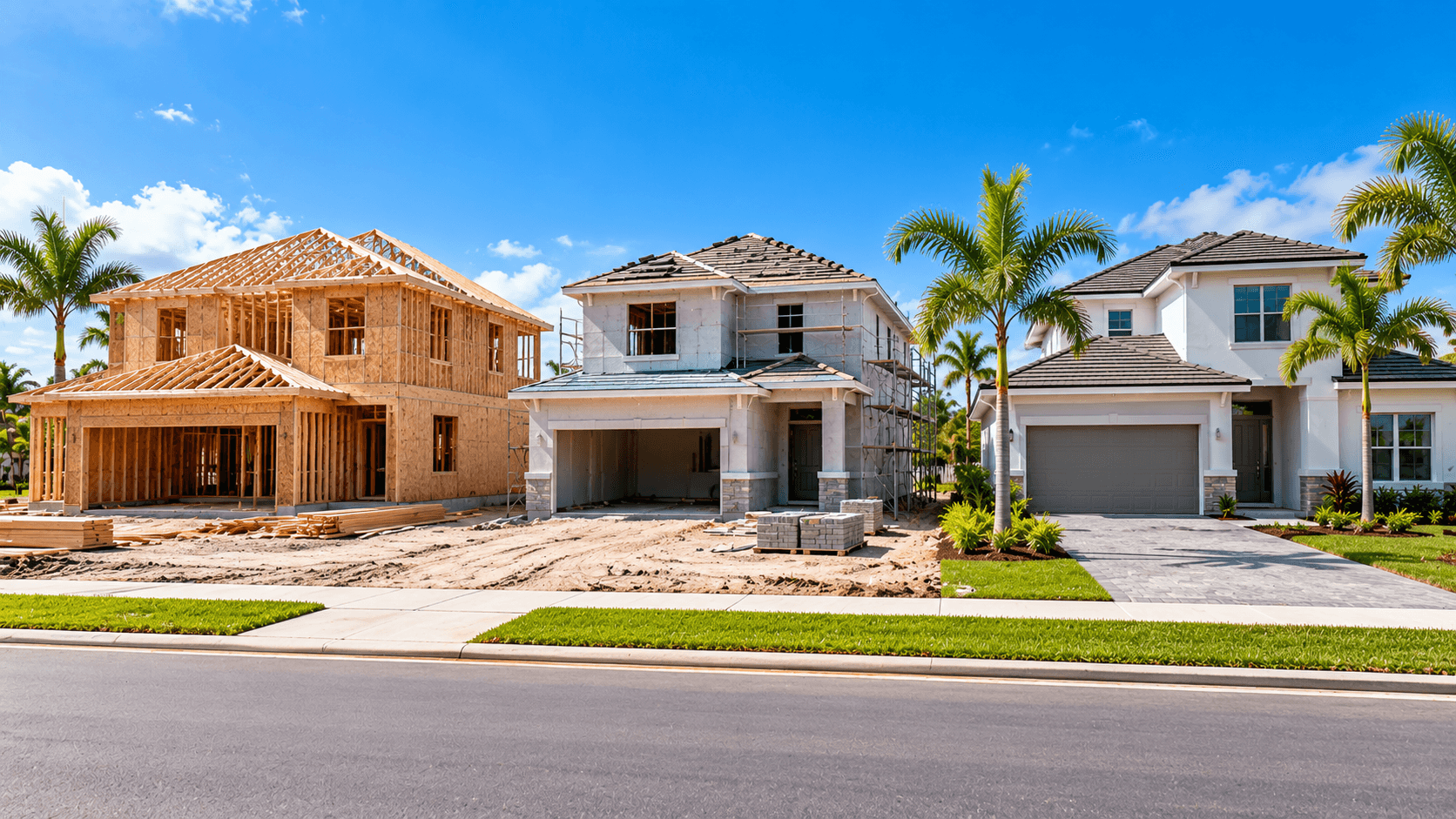
An inventory home is a new home that a builder offers from its stock for sale. It may be finished or still under construction. You choose that house, with its lot, plan, and selected features, rather than start with an empty choice of plans.
The label does not prove the house is ready today. It also does not tell you whether the price includes every feature in the photos. Ask for the exact address and a current listing for that house.
This guide helps Florida buyers read an inventory listing, check what is available, and compare the details of one house with another.
Inventory home is not the same as home inventory
In a builder listing, inventory home means an available new house. The phrase home inventory can also mean a list of personal belongings for insurance. Housing inventory can mean the total supply of homes on a market.
Those uses answer different questions. If you are shopping for new construction, search for homes for sale from the builder, then narrow by area, home type, price, and stage.
Risland Homes explains inventory homes as already built or under construction. That is useful evidence that the label can cover more than finished houses. Each seller still needs to explain the stage of your chosen home.

Ask for an address, not just a plan name
A plan name can appear on several houses. Those homes may sit on different lots and have different options, views, and prices. A plan page is not a complete offer for one address.
Ask for the street address, lot or homesite number, plan version, and status now. Check that those details agree across the listing, feature sheet, price quote, and contract.
Do not assume the house shown first in a gallery is the one for sale. Ask whether photos show the exact home, a model, a rendering, or a similar property. Save any photos of that address with the date.
When comparing houses, give each its own page in your notes. This avoids mixing the price of one lot with the kitchen package of another.
Learn how it became available
Some inventory homes begin as spec projects. The builder chooses the home before a buyer orders it. Others may become available after a past contract ends. Ask the seller for the history of the exact house.
The history can affect the feature package. A past buyer may have made selections that remain in the home. Do not assume those selections are included without checking the new sale papers.
Sale status after a deal fell through does not itself prove a defect. Ask what changed and check the real condition through papers and inspections. Avoid turning an open question into a claim about the home.
Our spec home buyer guide covers the wider buying steps. The spec home meaning guide explains why builders start some houses before finding buyers.
Sort homes for sale by stage
Use a simple stage list when reviewing inventory. Ask the builder to check where each house belongs rather than guessing from a listing photo.
Stage | Useful question |
|---|---|
Started or framing | What work, selections, and approvals remain? |
Interior work under way | Which finishes are ordered, installed, or still open? |
Near completion | What keeps the home from final readiness? |
Completed | What closing and possession steps still remain? |
These are shopping groups, not official approval categories. A house that looks complete may still need work or approvals. Ask for the facts behind the stage.
If timing drives your decision, read our quick move-in home guide. That page focuses on getting construction, financing, closing, and possession to line up.
Find out what the listed price includes
Ask for a written price for the address. Check whether it includes the lot and installed options. Ask whether an online starting price is only a plan price or applies to that exact home.
Ask for a list of included and excluded items. Check appliances, flooring, window coverings, laundry equipment, garage equipment, yard work, and any installed technology.
If the model has a wall treatment or an outdoor kitchen, do not assume it comes with the sale. Ask the builder to point to the home's written features.
Keep a separate list for things you would add after closing. A fence, blinds, or a missing appliance can affect your move budget even when it does not appear in the home's sale price.

Use a comparison sheet for each house
For each address, record the date you checked it, sale price, stage, work left, included items, and any written offer. Add a space for questions that are still open.
Do not fill an unknown answer with your best guess. Write "Ask builder" or "Quote needed." A complete-looking table with guessed entries can lead to a poor choice.
Measure useful spaces during an approved visit. Compare bedroom shape, closet access, pantry space, and garage dimensions. Square footage alone does not show how well the layout works.
Also look outside the house. Check yard size, window views, driveway space, and nearby construction. Ask about plans for undeveloped land instead of treating today's view as permanent.
Check whether changes are still allowed
Inventory does not mean no choices are possible. It also does not mean choices are open. The answer depends on the builder, ordered materials, build stage, and agreement.
Ask for a written list of choices left. For each change, check cost, approval, and any effect on completion. Do not assume a house with unfinished walls has an open design menu.
Compare the cost of changing the home with the cost of selecting a different available house. You may find a better fit without altering anything. If you need major changes, pause before paying a deposit.
Our spec home versus custom home comparison helps you judge whether stock for sale gives you enough design control.
Separate the house price from the home budget
An inventory list helps you find a house. It does not give you a full monthly budget. Ask a lender for a payment for that house and closing-cost estimate.
Ask which tax and insurance figures were used. In Florida, a recent tax bill may reflect a different state of construction. Ask for an estimate for the finished house through the right local sources and lender.
Obtain an insurance quote for the actual address. Ask about coverages, exclusions, deductibles, and lender requirements. Do not assume new construction removes flood risk or guarantees a low premium.
Review association dues and other regular charges. Some Florida communities have CDD assessments. Our CDD fee guide explains the type of charge; check the amount in records for that house.
Check offers without assuming every house qualifies
Two homes for sale from the same builder can have different offers. A benefit may depend on price, lender, signing date, or closing date. Ask for the terms tied to your chosen address.
Mark the offer's date and expiration. Ask whether the sale price already reflects it. This avoids counting the same benefit twice when comparing costs.
If an offer involves financing, have your lender explain how it would appear in the loan papers. Compare the full payment and cash needed, not just the largest number on the sales flyer.
Do not choose a poor-fitting house only because it has a promotion. It may cost more to solve a layout or location problem than the benefit saves.
Arrange the review before closing
Ask about private inspection access before signing. The builder may have time and safety rules. A qualified inspector can explain which parts can be reviewed at the home's stage.
Our new construction inspection guide explains what that review does. A listing's available status does not replace an inspection or prove all systems work.
Keep the inspection report and builder response with the home's papers. Ask which repairs are agreed and when they will be completed. Use the final walkthrough to compare the property with agreed features and repairs.
For major open issues, discuss the facts with your agent and attorney. Do not assume you can cancel, delay, or keep money back without costs or other effects. Your agreement matters.

Recheck sale status before you act
Inventory changes. A listing that was open last week may now be under contract. Ask the builder to check its status now before you plan a tour, submit an offer, or arrange other steps around that home.
Keep the date of that confirmation. If a salesperson offers an alternative, start a new record for the new address. Do not carry the old price, features, or offer into the replacement home.
The safest comparison is simple: one address, one stage now, one written feature list, and one clear set of terms. Use the inventory label to find homes, then use those facts to choose among them.
Common Questions
Is an inventory home always move-in ready?
No. A builder may list homes still under construction as inventory. Ask what work, approvals, financing, and possession steps remain.
Is an inventory home a resale home?
In this new-construction context, it is a builder's available new house. Check any past use or occupancy and the sale terms for the address.
Is inventory home the same as spec home?
Builders often use the terms together. Spec explains starting before a buyer orders the house; inventory points to stock for sale. Ask how the seller uses each term.
Can an inventory home include a past buyer's choices?
Yes, that is possible when a home goes back on sale. Ask about its history and get the included features in the new agreement.
Does the online price include the lot and options?
Do not assume it does. Ask for a written price and feature list for the exact address. A plan's starting price may describe a different package.
How do I compare two inventory homes with the same plan?
Compare their lots, plan versions, stage, installed features, written prices, regular costs, and terms. A shared plan name does not make the houses identical.
Compare real homes for sale
Want help checking Florida inventory listings by address, features, and full costs? Call 561-704-0091 or schedule a buyer consultation with National House Search to build a clear shortlist of actual homes.