How Property Taxes Work on a Newly Built Florida Home
In this article
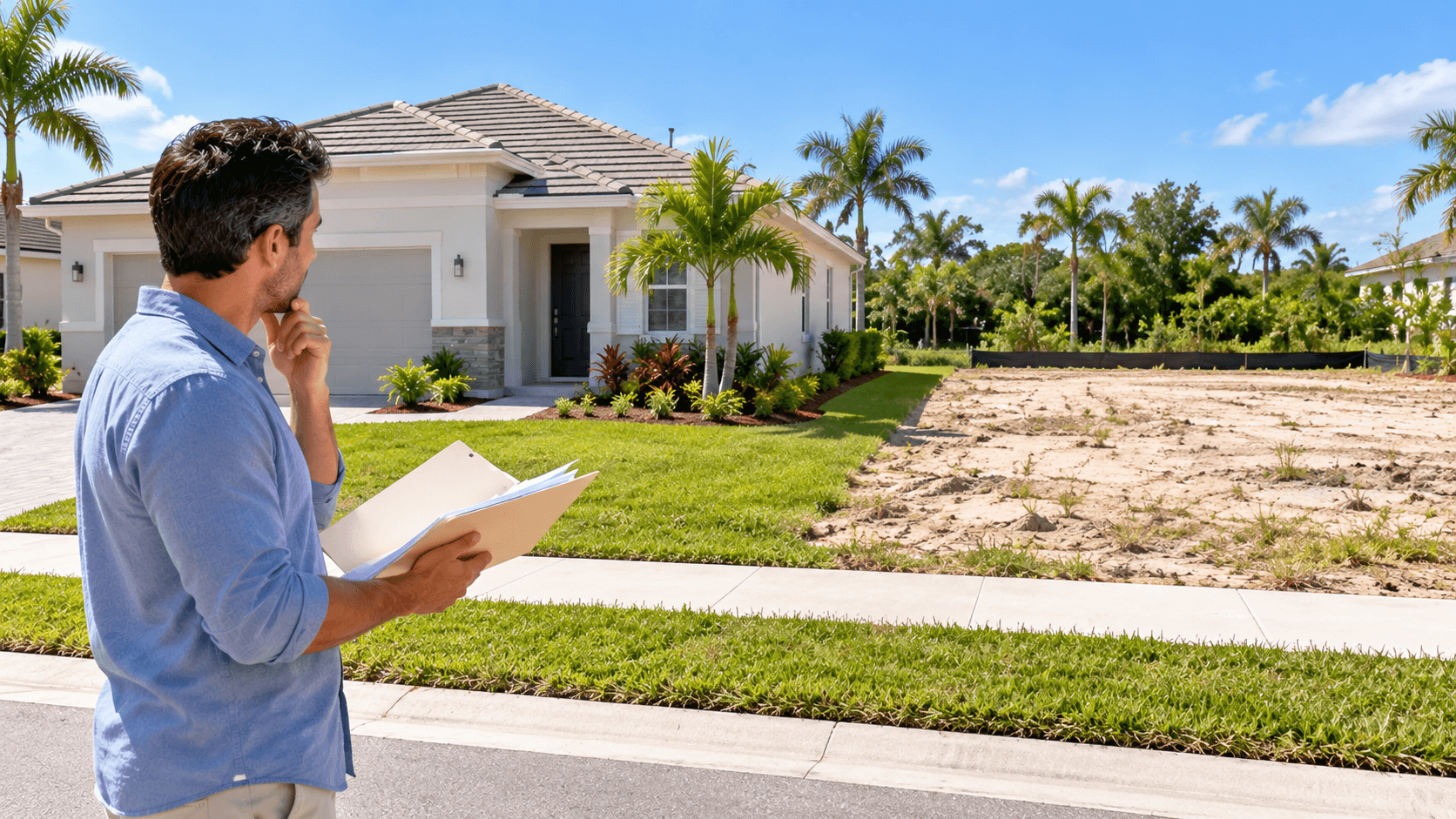
Taxes on a new Florida home can rise later. The finished house may not yet be in the tax record. A low first bill may reflect land alone. Do not use it as the lasting cost of owning the home.
The key date is January 1. The county reviews the home's status on that date. Closing is a separate event. The bill comes later. The lender also has its own escrow review.
Before you buy, get a finished-home estimate and ask how the lender will fund taxes. This page follows that timeline. Our Florida property-tax buyer guide explains the wider system.
Begin with the land and house separately
Look at the county record for the exact parcel. Does it show a land value and a building value? What year does it cover? Is the lot still part of a larger parent parcel?
A new subdivision can have records that are still being updated. A familiar street address alone may not be enough. Match the legal lot, parcel number and purchase papers before trusting a displayed bill.
Ask the property appraiser what the current record includes. A blank building field is a reason to ask a question. It is not proof that the finished house will remain untaxed.
Keep the answer with the dated record. Your lender and closing agent may need that context. Tell them if the current bill does not reflect the home you are buying.
Why January 1 matters
Florida Statute 192.042 sets January 1 as the assessment date for real property. It says improvements not substantially completed on that date have no value placed on them. The land can still have taxable value.
The statute ties substantial completion to being usable for the purpose for which the improvement was built. The county must apply that rule to the facts. Do not decide the tax year based only on a sales agent's move-in forecast.
Ask what proof the county needs. A permit record may help. A completion record may help too. Let the appraiser explain its review. A closing delay alone does not settle the tax question.
Keep three dates in your notes: the county's assessment date, the actual completion facts and your closing date. Each has a purpose. Combining them into one “new home date” makes the timeline harder to understand.

Follow a simple teaching timeline
Example only: Assume a house is not substantially complete on January 1 of Year One. It is finished later that year, and the buyer closes in the fall. The Year One record may reflect the lot without that completed improvement.
Now assume the house is substantially complete on January 1 of Year Two. The Year Two assessment can include the finished improvement. The later bill may therefore look very different from the one used during the purchase.
This example describes a sequence, not a parcel decision or promised tax amount. The county's records, applicable benefits and local levies still matter. Ask the appraiser which year and values apply to your home.
On a calendar, mark the expected notice and bill as well as closing. That shows why the higher cost may become clear months after you moved in. The wait does not make the earlier lower number a permanent rate.
Ask for an estimate of the finished home
Use the county's current estimator if one is available. Enter the right location and proposed purchase details. Read what the tool assumes about assessed value, exemptions and other charges.
Ask how to estimate a home not yet in the record. A builder's worksheet can help frame the question. Then ask the county how it will assess the lot and house. Keep the answer with that worksheet.
Do not simply add the old land tax to a percentage of the sales price. That can mix different bases or count the land twice. Ask which method the office recommends and keep the assumptions visible.
Label the result “finished-home estimate” with its date. Save the old bill under a separate heading. This makes it clear which number describes the past and which number supports your future budget.
Check the lender's opening escrow calculation
Escrow is money collected to pay items such as taxes and insurance. Ask the lender which annual tax figure it used in your payment estimate. Does it represent the lot or the completed home?
Request the opening escrow statement and review the tax entries. Ask what happens if the actual bill is higher than the estimate. Avoid assuming that a lender's approval means every future cost is already fully funded.
The CFPB's escrow guidance explains that escrow can involve money at closing and amounts in monthly payments. Ask the lender to show both in your own figures.
Keep the tax discussion separate from a rate buydown or other loan feature. A low interest rate does not establish the tax bill. Review the whole payment, including the assumptions behind each part.
Understand a later escrow shortage
A shortage can occur when the account lacks needed funds. A higher tax bill is one possible cause. Read the servicer's review. Check the reason and the math.
There can be two different effects: saving more for future bills and repaying an amount the account lacks. Ask the servicer to separate those effects. Do not assume that every dollar of a payment increase is a new tax.
Example only: If a household changes its tax planning figure from $2,400 a year to $7,200, the annual difference is $4,800. Dividing by 12 gives $400 more in monthly planning. These are invented figures, not a local quote or an escrow repayment schedule.
An actual shortage payment depends on the account and applicable rules. The CFPB's escrow-account rule addresses the analysis process. Request your servicer's written explanation rather than using a sample as your payment instruction.

Read closing tax adjustments carefully
The closing statement may divide certain tax costs between buyer and seller. Ask the closing agent which period the adjustment covers and whether it uses an estimate. The purchase contract controls the agreed treatment.
An amount credited at closing does not prove that the next full-year bill is funded. Ask where the credit goes and what it pays for. Keep that answer separate from the lender's escrow calculation.
If the contract provides for a later adjustment, ask how it works, who handles it and what records are needed. Do not assume an automatic refund or a guaranteed payment from the builder.
For the broader closing budget, see new construction closing costs. Use this page to track the tax timing, rather than repeating every fee on the settlement statement.
Put homestead on its own timeline
Buying and moving in do not settle a homestead claim on their own. Ask the appraiser which tax year fits your facts. State when you owned the home. State when it became your main home. Keep the answer and filing date.
Our homestead filing guide covers documents, receipts and follow-up. Keep that task distinct from checking when the completed house enters the assessment.
Compare a finished-home estimate with and without any unconfirmed benefit. This helps you understand the effect of the assumption. It does not mean you should ignore a benefit once the county approves it.
Check the county's decision and later notice. If a benefit is missing, ask the appraiser promptly. Do not lower a required mortgage payment yourself while waiting for the record or escrow account to change.
Check charges that follow another schedule
The appearance of a finished house is not the only event that can change costs. District assessments and other non-value-based charges need their own review. Ask whether the estimate includes them and which year they cover.
Use our property-specific CDD assessment checklist if the lot is in a Community Development District. A land-only tax record does not answer every question about district billing.
Keep a short list of all annual items and who pays them. Mark those collected through escrow and those billed directly. This reduces the risk of leaving a bill out or saving for the same item twice.
Recheck the list if you switch lots, phases or home sites. An estimate attached to the first home you toured should not quietly follow you into a different contract.
Review the first two ownership years
Save the closing papers, first tax notice, first bill and each escrow statement. Compare their parcel, tax year and amounts. They describe related events but may not arrive in the same order.
When the later notice arrives, check whether the building value appears as expected. Verify the listed exemptions. Contact the appraiser about value or benefit questions and the collector about payment records.
If the mortgage payment changes, compare the servicer's explanation with the actual bill. The CFPB recommends contacting the servicer promptly about escrow problems. Keep a copy of your request and response.
Maintain a cash buffer while the figures settle. Choose the amount based on your own estimates and needs. The goal is a planned transition from construction records to normal ownership bills, with fewer surprises along the way.

Common Questions
Why is the builder's current property-tax bill so low?
It may reflect land without the completed house. Check the parcel and tax year with the property appraiser. Do not use that bill as a permanent estimate.
Does closing trigger the completed-home assessment right away?
Closing and assessment are separate events. Florida uses January 1 for real-property assessment. Ask the county how the substantial-completion rule applies to the home's facts.
Can my mortgage payment rise even with a fixed rate?
Yes. The tax or insurance portion collected through escrow can change. Ask the servicer to separate future bill funding from any shortage repayment.
Does a seller's closing credit cover all future property taxes?
Do not assume that. Ask the closing agent which period and amount the credit covers. Review the escrow statement separately.
Should I use the land bill or a finished-home estimate to plan?
Use a checked finished-home estimate for the ongoing budget. Keep the land bill as historical details and record any unconfirmed assumptions.
Who should explain a mismatch in my escrow statement?
Start with the mortgage servicer. Compare its tax figure with the actual county bill. Ask the property appraiser about values or exemptions and the collector about payments.
Planning a Florida new-home purchase? National House Search can help you compare the first-year and finished-home tax questions before you commit. Call 561-704-0091 or schedule a buyer consultation.