Jonathan Dickinson State Park: A Guide for South Stuart Residents
In this article
Jonathan Dickinson State Park is a large Florida state park in Hobe Sound, in southern Martin County. It is known for the Loxahatchee River, the first river in Florida to be named a National Wild and Scenic River, plus hiking and biking trails, paddling, camping, cabins and boat tours to the old Trapper Nelson homestead. The main entrance is at 16450 SE Federal Highway, which is U.S. 1. From Preserves at Park Trace in south Stuart, you reach it by heading east on SE Cove Road to U.S. 1 and then south.
Below, we cover what there is to do at the park, a little of its history, tips for your first visit, and why living nearby is a real plus.

Where Is Jonathan Dickinson State Park?
The park sits between Hobe Sound and Tequesta, near the line between Martin County and Palm Beach County. The entrance is right on U.S. 1.
That matters if you live in South Stuart. Communities like Preserves at Park Trace sit off SE Cove Road, which runs east to U.S. 1. From there, U.S. 1 south takes you through Hobe Sound to the park. We give road names, not drive times, because traffic changes by the hour.
How Big Is It?
Martin County's tourism office calls Jonathan Dickinson the largest state park in southeast Florida. It covers many kinds of natural land:
Sand pine scrub, a dry, sandy habitat found in only a few parts of Florida.
Pine flatwoods, open forest with palmetto underneath.
Mangroves along the water.
River swamps along the Loxahatchee River.
Because it is so big, you can visit many times and have a different day each time.
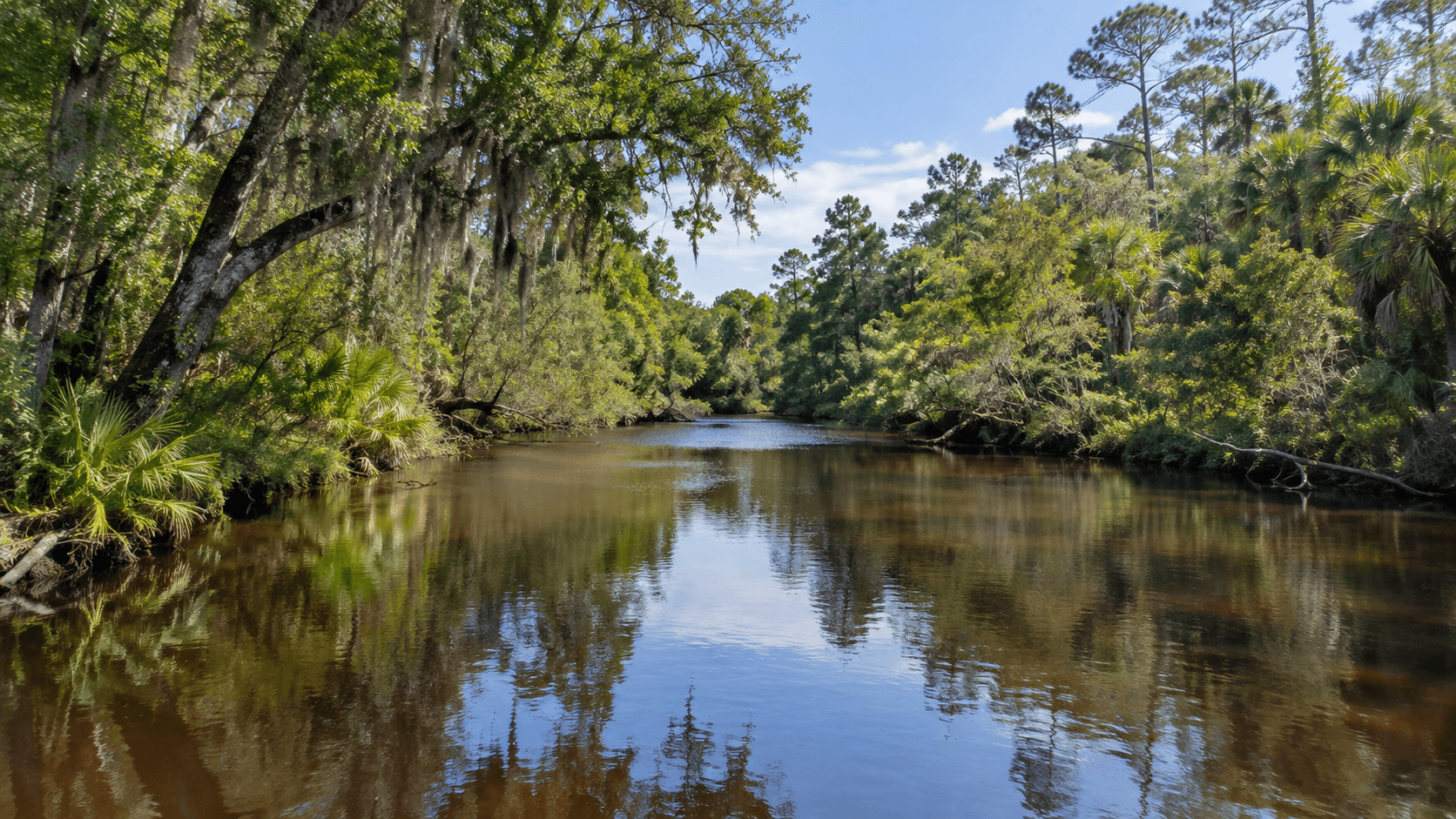
The Loxahatchee River
The Loxahatchee River runs through the park. In 1985 it became the first river in Florida to be named a National Wild and Scenic River. That is a federal title given to rivers with special natural value.
The river's dark water winds through the park. It is a favorite spot for:
Kayaking and canoeing.
Wildlife watching, especially birds.
Fishing, with the right Florida fishing license.
The park has offered ranger-led boat tours, and paddling is popular. Services can change, so check the official park page before you go.

Trapper Nelson's Homestead
One of the most unusual stops in the park is the old homestead of Trapper Nelson. He came to the area in the 1930s and lived on the banks of the Loxahatchee, trapping animals and selling furs. People called him the "Wildman of the Loxahatchee."
After he died in 1968, the state took over his land. Today the park runs boat tours up the river to the homestead. It is a fun trip for kids and adults.
A Piece of World War II History
During World War II, the U.S. Army built Camp Murphy on this land. It was a secret radar training school that opened in 1942. The camp housed more than 6,000 officers and soldiers. The camp closed in 1944, and most buildings were torn down. Some foundations are still there.
The land became a state park and opened to the public in 1950. The park is named for Jonathan Dickinson, a Quaker merchant whose ship wrecked near this coast in 1696. He wrote a journal about his journey north to St. Augustine.
Things to Do at the Park
Here is a simple list of what people come to do:
Hike the park's trails through scrub and flatwoods.
Bike on the paved multi-use trail or on the Camp Murphy mountain bike trails, which are well known among Florida riders.
Ride horses on the park's horse trails.
Paddle the Loxahatchee River.
Camp at the park's campsites, or stay in one of its cabins.
Picnic with family and friends.
Learn at the Elsa Kimbell Environmental Education and Research Center, which has exhibits about the park's nature and history.
The park is also home to Hobe Mountain, a tall sand ridge. Check the park's page to see which areas and facilities are open before you go.
The Best Seasons to Visit
Like most of South Florida, the park is easiest to enjoy in the dry season, roughly November through April. Days are cooler and bugs are fewer, which makes long hikes and bike rides more comfortable.
Summer brings heat, humidity, and afternoon thunderstorms. You can still visit. Just go early, plan to be off the trails by early afternoon, and keep an eye on the sky.
Bringing Kids Along
The park is a good family outing. Kids tend to love the boat tour to Trapper Nelson's homestead, the exhibits at the education center, and spotting birds and turtles along the river. Pick a short trail for young children, and bring snacks and plenty of water.
Tips for Your First Visit
Check the official page first. The Jonathan Dickinson State Park page lists hours, fees and any closures.
Go early. Mornings are cooler, and wildlife is easier to spot.
Bring water and sunscreen. Much of the scrub has little shade.
Bring bug spray. Near the river, mosquitoes can be busy.
Wear real shoes. Sandy trails are hard in flip-flops.
Why Living Near a Big State Park Matters
Living close to a park this size is a daily-life benefit, not just a weekend one.
Easy exercise. A morning bike ride or walk becomes part of your routine.
Something to do with visitors. Guests from out of town always want to see "real Florida."
A place for kids to learn. The education center and river tours are great for school-age children.
South Stuart has more than one state park close by. The nearest to Park Trace is Atlantic Ridge Preserve State Park, which Jonathan Dickinson's staff also manages. Read our Atlantic Ridge Preserve State Park guide.
For more on daily life in this part of town, see Port Salerno and daily life near Park Trace and our guide to Stuart FL zip codes.
Coming Home After a Day Outside
After a day on the trails, a covered lanai is where you put your feet up. Every Park Trace floor plan has one. See how they compare in what is a lanai?
Homes at Preserves at Park Trace are single-family homes by D.R. Horton, with five floor plans from three to five bedrooms. They have recently started in the low $600,000s. Call 561-704-0091 for today's numbers.

Visit South Stuart With Us
Want to see the park and the homes nearby in the same day? We can set up a visit to Preserves at Park Trace, walk you through the floor plans and tell you which incentives are on the table right now.
Call 561-704-0091 or book your visit to Preserves at Park Trace.
Common Questions
Where is Jonathan Dickinson State Park?
It is in Hobe Sound, in southern Martin County, at 16450 SE Federal Highway (U.S. 1), between Hobe Sound and Tequesta.
How do I get there from Preserves at Park Trace?
Take SE Cove Road east to U.S. 1, then head south on U.S. 1 through Hobe Sound to the park entrance.
What river runs through the park?
The Loxahatchee River. In 1985 it became Florida's first National Wild and Scenic River.
Can you camp at Jonathan Dickinson State Park?
Yes. The park has campsites and cabins. Check the official park page for reservations and current availability.
Who was Trapper Nelson?
He was a trapper who lived on the Loxahatchee River from the 1930s until 1968. The park runs boat tours to his old homestead.
Is the park good for mountain biking?
Yes. The Camp Murphy mountain bike trails are well known among Florida riders.
Want to live near Florida's first Wild and Scenic River? Call 561-704-0091 or book at nationalhousesearch.com/schedule.cabins,