How Long Does a New Construction Home Warranty Last?
In this article
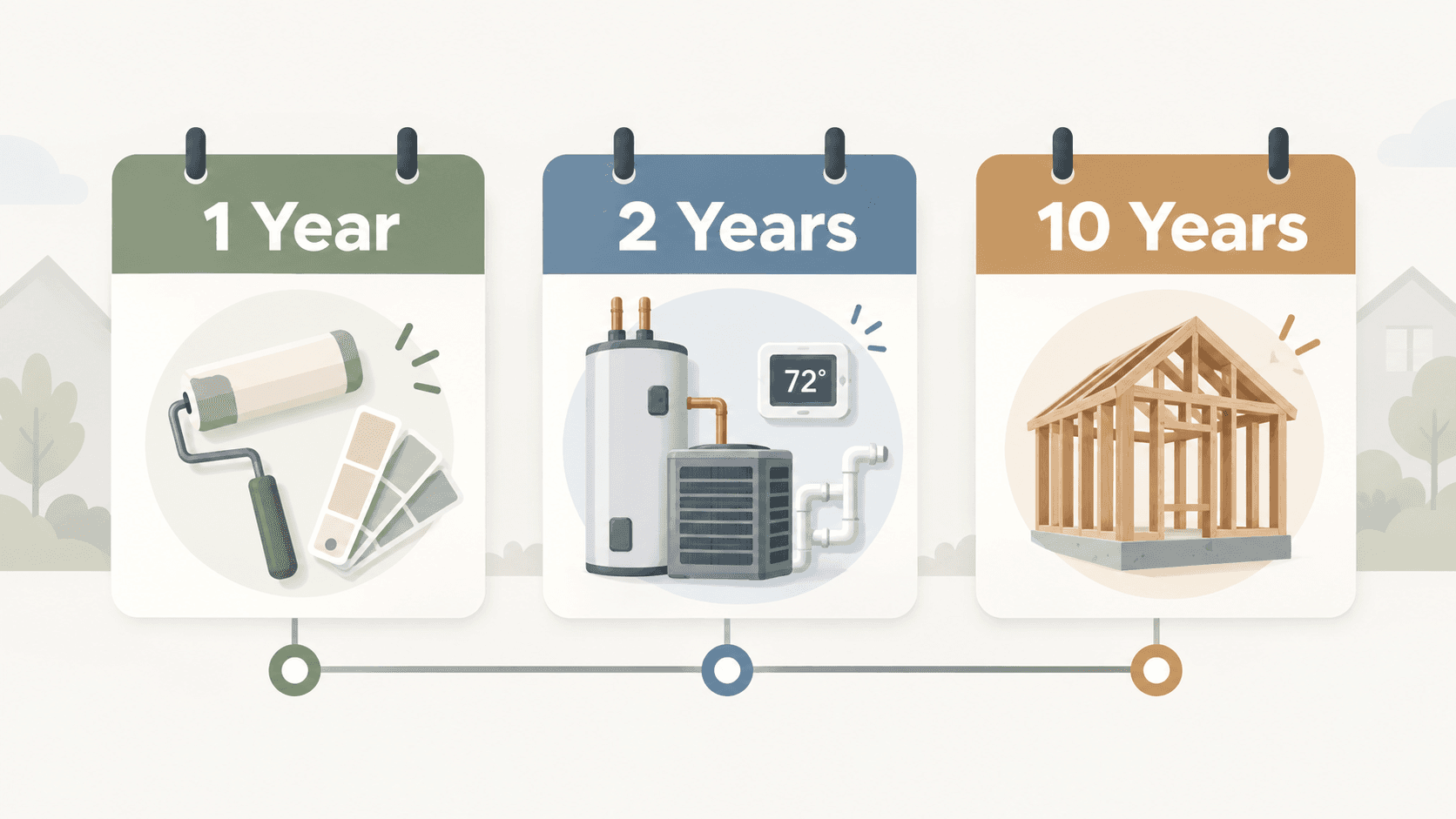
A new construction home warranty does not have one universal end date. Many warranties use separate periods for workmanship, home systems, and major structural defects. A common pattern is one year, two years, and ten years. The buyer's written warranty controls every date and definition.
The first question is not only, “How many years?” It is, “When does each period start, what must be reported before it ends, and how must notice be sent?”

Why one warranty can have several clocks
A newly built home contains finishes, installed products, delivery systems, and frame parts. The warranty may assign a different period to each group. It may also send appliances and products to manufacturer warranties with their own dates.
The Federal Trade Commission says builder warranties often give limited coverage for workmanship, materials, and systems such as plumbing and electrical work. Some major structural defects may have a different period. It also warns buyers to check the actual plan.
The new construction home warranty coverage guide explains what may be covered. This page turns the same document into a calendar.
A common one-year period
The early period often covers parts tied to work and parts. Depending on the document, that may include drywall, paint, trim, doors, windows, cabinets, flooring, siding, stucco, roofing details, caulk, or other installed finishes.
“One year” does not always mean the builder will fix any mark found during that year. The plan may use performance standards, exclusions, owner-care rules, and special reporting windows. It may also treat a first-year courtesy list differently from a formal claim.
Calendar the end date at closing. Add reminders well before it. The 11-month plan inspection article explains why many owners review the home before a possible first-year deadline.
Do not hold an urgent issue for the month-11 list. Report active water, power danger, unsafe movement, loss of a key system, or fast damage right away.
A common two-year systems period
Some plans use a longer period for major delivery systems. The FTC lists power, plumbing, heating, ventilation, and air conditioning as examples that may receive limited cover.
The plan may define the covered system narrowly. A plumbing delivery defect may be covered while a clogged drain caused by use is not. A power installation issue may be covered while owner-added equipment is not.
Save service visits, filter changes, care receipts, and photos. A company may ask whether the homeowner took reasonable steps to care for the system and prevent added damage.
Check whether the period ends two years after closing, occupancy, title transfer, substantial finish, or another date. Do not guess from the age of the home.
A common ten-year frame period
Some plans advertise ten years of structural coverage. This is usually not ten years of full-house repair cover. It may apply only to a defined major frame defect involving listed load-bearing parts and a serious effect on safety or use.
The 1-2-10 plan explanation shows how the three tiers work together. Read its definitions beside the written plan. A small finish crack and a qualifying frame failure are not the same claim.
A third-party firm may administer or insure the frame part. Save its contact information even when early claims go directly to the builder.

The start date matters as much as the length
Possible start dates include:
the closing date.
the date title transfers.
the certificate of move-in date.
the first move-in date.
a stated plan commencement date.
main finish.
another date defined in the contract.
The dates can be close but not identical. A home may receive a certificate before the buyer closes. A buyer may close before moving in. A repair completed later may or may not receive a new period.
Find the plan's meaning and write the date on a one-page timeline. If the document has conflicting dates, ask the builder or plan firm for written clarification before a deadline.
Notice date and repair date are different
Many plans require the owner to report an item before cover expires. The work itself may happen later. That makes proof of timely notice important.
Do not assume that a phone call, casual text, message to a sales rep, or piece of blue tape counts as a claim. Use the required portal, email, letter, or form. Save the confirmation number and submission time.
Ask these questions:
Must the firm receive the claim before the end date?
Is there a special first-year list window?
Does the plan allow one submission or many?
Is written notice required?
Is an emergency call followed by written notice?
Does a denied claim have a review deadline?
The FTC advises homeowners to follow the claim instructions, put repair requests in writing. Keep records of correspondence and conversations.
Manufacturer dates may be separate
Appliances, windows, roofing products, air-conditioning equipment, water heaters, garage-door gear, and other products may have maker plans. Their periods may start on installation, purchase, closing, or signup.
Collect model and serial numbers. Complete any allowed signup. Save receipts and installer details. Ask whether the first service call goes to the builder or maker.
A service contract sold as a “home warranty” has a separate contract period too. The builder plan versus home plan guide explains why those clocks should not be mixed.
Does coverage restart after a repair?
Often, buyers should not assume that a repair restarts the original plan. The document may give a short warranty on repair work, keep the original end date, or state another rule.
After work is complete, ask for:
the work date.
the item repaired.
parts replaced.
trade or firm name.
new steps.
any repair-specific coverage.
a closed-ticket record.
Test the result when safe. If the symptom returns, refer to the earlier ticket and report the change promptly.
What happens when the home is sold?
Transfer rules vary. A plan may follow the home, cover only the first owner, require a transfer form, require a fee, or limit later owners to structural coverage.
If buying a newer resale home, ask for the plan, closing date, claim history, transfer terms, and administrator contact. Do not rely on the seller's estimate of “years left.”
If selling, give the buyer the full record. Do not promise transfer until the firm confirms it in writing.

A practical warranty calendar
At contract or before closing
Ask for the sample plan.
Identify the warrantor and administrator.
Note proposed cover groups.
Read limits, care duties, and disputes.
At closing
Save the final plan and each addendum.
Confirm the start date.
Save emergency contacts.
Record maker documents and serial numbers.
During the first months
Report urgent items immediately.
Track seasonal rain, cooling, doors, windows, and drainage.
Keep care proof.
Before a possible first-year deadline
Review the home and open tickets.
Consider an independent check.
Submit through the required method early.
Save confirmation.
Before later system or frame dates
Review the stated definitions.
Confirm the correct firm.
Gather prior records and care proof.
Do not let a major symptom wait for a calendar reminder.
The new build check timing guide shows how pre-closing and warranty-stage inspections fit on one home-buying timeline.
If the builder gives different dates
Ask for the exact warranty section. A sales rep's outline may be incomplete. The builder may also have a separate customer-care policy that is not the legal warranty.
For a builder-specific example, see the D.R. Horton plan guide. Brand documents can define their own cover, administrator, and claim steps.
If a denial or delay may affect a legal right, talk with a qualified Florida attorney. Florida's Chapter 558 notice process for certain completed construction-defect claims is separate from the normal plan calendar and has its own rules.
Use two alerts for each end date
Set one alert about 60 days before a period may end and a second alert about 30 days before. The first alert gives time to review the home and gather records. The second helps confirm that each report was sent through the right path.
Do not let the alert date become the claim date. Send the report as soon as a covered issue is known. A calendar is most useful for items that are easy to miss, open tickets that need follow-up. A full review before an early term ends.
Share the dates with each adult owner. Store the plan, claim links, and contact numbers in a folder both owners can reach.
A quick date check
Write the start date first. Add each end date. Mark the notice rule. Add a 60-day alert. Add a 30-day alert. Save the claim link. Keep the proof in one place. Check the dates after each repair.
Common Questions
Is each builder plan one year?
No. Some parts may have one-year cover, while systems or structural defects may have longer periods. The written plan controls.
When does a builder plan start?
It may start at closing, title transfer, move-in, main finish, or another defined date. Read the commencement section.
Does reporting a claim before the deadline protect it?
It may, if the report follows the required method and timing. Save written proof and read the rules for check and repair.
Does a repair restart the plan?
Do not assume it does. Ask for the repair record and any separate cover on the repair or replacement part.
Can plan cover transfer to a second owner?
Transfer rules vary. Some plans follow the home, while others require notice, a fee, or first-owner status.
Should I wait until month 11 to report everything?
No. Report urgent or fast-changing issues right away. The month-11 review is a planning tool, not a reason to delay.
Put each deadline on one calendar
National House Search helps Florida new-construction buyers organize plan dates, check stages, closing records and builder questions. Call 561-704-0091 or schedule a buyer consultation to prepare a practical warranty calendar for your new home.