HO6 Insurance for Solstice's Townhome-Style Condos
In this article
HO6 insurance is the policy a condominium owner buys for their own unit. It is often called ""walls-in"" coverage. It matters at Solstice, because Lennar describes the community as ""a charming townhome-style condo community."" The homes look like townhomes, with their own front doors and rear two-car garages, but the ownership is set up as a condominium. In Florida, that changes who insures what. This guide explains HO6 insurance in plain words, what Florida law says the association covers and what falls to you, and what to ask before you close.

What HO6 insurance is
Homeowners policies come in standard forms. HO-3 is the common form for a house. HO-6 is the form written for condominium unit owners.
The difference comes from what you own. In a condominium, you own your unit, and you share ownership of the common property with the other owners through a condominium association. The association buys a master policy for the shared property. Your HO6 policy covers what the master policy does not.
An HO6 policy usually has these parts:
Dwelling, or walls-in, coverage. The parts of the unit that are yours to insure.
Personal property. Your furniture, clothes and electronics.
Personal liability. If someone is hurt in your home and blames you.
Loss assessment. Help if the association charges owners for a covered loss.
Loss of use. Help with living costs if a covered loss forces you out for a while.
The amounts, limits and deductibles vary by insurer. Get more than one quote.
What Florida law says the association insures
Florida's condominium law spells out the split. Section 718.111(11) of the Florida Statutes says the association's property policy must cover ""All portions of the condominium property as originally installed or replacement of like kind and quality, in accordance with the original plans and specifications.""
Then it lists what the master policy must leave out. The coverage ""must exclude all personal property within the unit or limited common elements, and floor, wall, and ceiling coverings, electrical fixtures, appliances, water heaters, water filters, built-in cabinets and countertops, and window treatments.""
The law ends that list with one key line: ""Such property and any insurance thereupon is the responsibility of the unit owner."" You can read section 718.111 on the Florida Senate site.

What that means inside a Solstice home
Put the law next to Lennar's included list for Solstice, and the walls-in items become easy to picture. Under the statute, items like these are yours to insure:
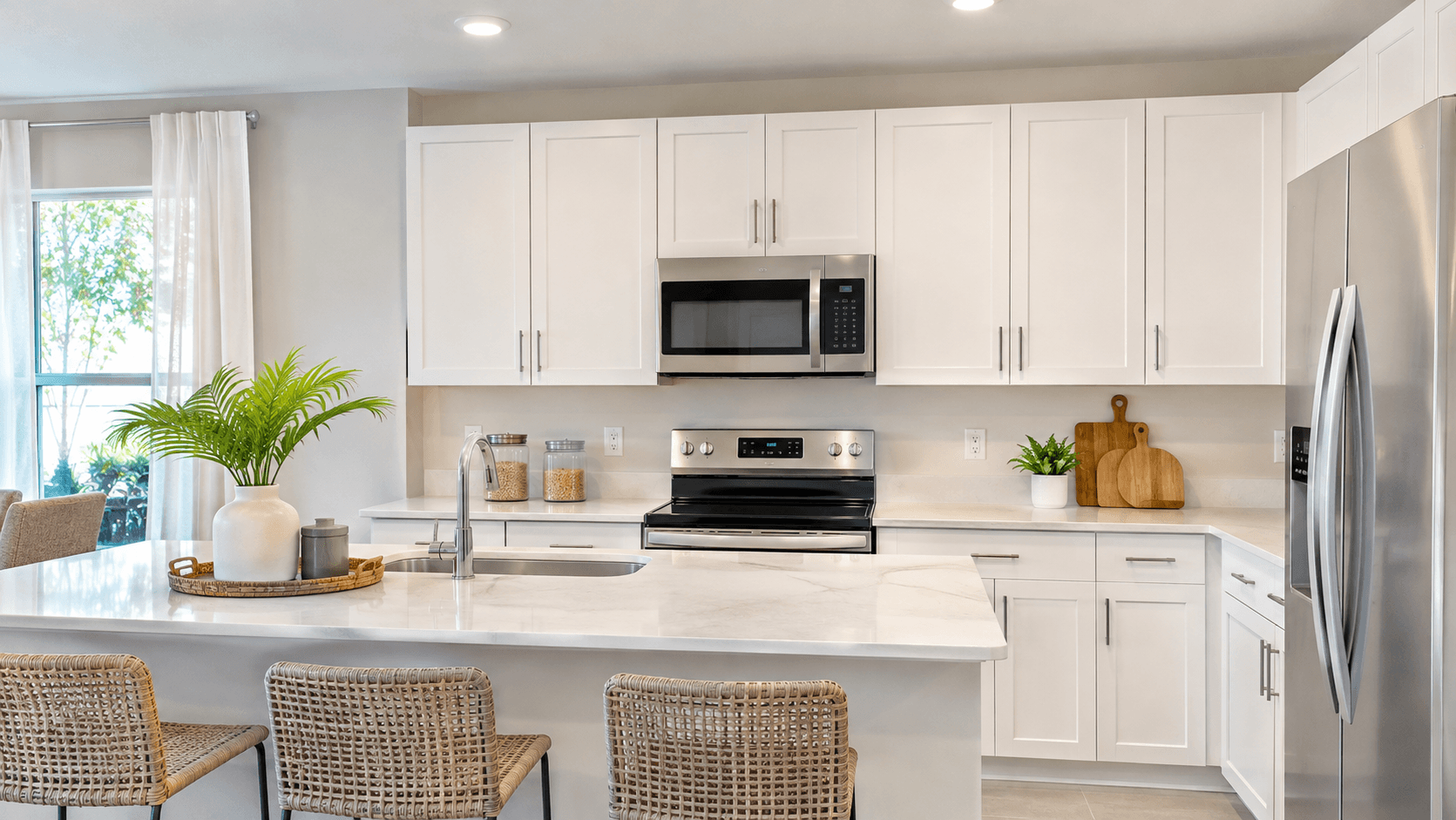
Countertops and cabinets. Lennar lists ""Porcelain 2cm countertops with 6"" backsplash"" in the kitchen and 36-inch upper cabinets.
Appliances. The stainless range, microwave, dishwasher and refrigerator, plus the ""Washer and Dryer included"" line.
Floor coverings. The 18-inch ceramic tile on the first floor and the carpet in the bedrooms and on the stairs.
Electrical fixtures. The recessed LED downlighting and other fixtures inside the unit.
Window treatments. Any blinds or curtains you add.
Your belongings. Everything you move in.
To see how the five plans differ in size, read our Solstice plan-by-plan cost guide. So when you set your walls-in coverage amount, think about what it would cost to replace the finishes and appliances, not just your furniture. For a full room-by-room list of what Lennar includes, read our guide to the carbon monoxide detector and the rest of the Solstice included list.
The townhome-style twist
In a high-rise condo, the line between unit and common property is easy to picture. In a townhome-style condo, it can be less obvious. Who insures the roof over your unit, the exterior walls or the garage? The answer depends on how the condominium's own documents draw the unit lines.
Do not guess. Ask the sales team for the declaration of condominium and the master policy summary, and give both to your insurance agent. For a closer look at the wording, our guide to what townhouse style condo means at Vivant walks through the same Lennar setup.
Loss assessment coverage: Florida's minimum
Florida adds a rule for every unit owner policy. Section 627.714 says that for policies issued or renewed on or after July 1, 2010, coverage ""must include at least $2,000 in property loss assessment coverage."" The deductible on that coverage can be no more than $250.
Loss assessment coverage helps if the association has a covered loss and charges each owner part of the cost. $2,000 is the floor, not a target. Many owners choose more. Ask your agent what a higher limit would cost. You can read section 627.714 on the Florida Senate site.
The same section says every unit owner policy must state that its coverage is ""excess coverage over the amount recoverable under any other policy covering the same property."" In plain words, the master policy pays first where it applies, and yours fills the gap.
Flood is a separate policy
HO6 policies, like most homeowners policies, do not cover flood. That takes its own policy. Our guide to Florida flood insurance for home buyers explains who needs it and how waiting periods work. Ask your lender early whether your loan will require it.
Your lender will ask for it
If you finance your Solstice home, expect your lender to ask for proof of an HO6 policy before closing. FHA's own paperwork for single condo units lists ""Walls-In (HO-6)"" among the insurance documents a lender collects. Our guide to how FHA reviews a condominium like Solstice covers what else FHA checks in a condominium.
Steps to line up HO6 coverage
Get the declaration and master policy summary from the sales team once you are under contract.
Share them with two or three insurance agents and ask for HO6 quotes.
Set walls-in coverage based on the finishes and appliances listed above.
Choose your loss assessment limit. At least $2,000 by law.
Price flood coverage at the same time.
Send the policy to your lender well before your closing date.
Questions to ask your insurance agent
Does this quote use the walls-in amount that matches my finishes and appliances?
Is the policy written on replacement cost or actual cash value for my belongings?
What is my deductible for a hurricane loss, and is it a dollar amount or a percentage?
How much loss assessment coverage do you suggest above the $2,000 minimum?
Does the quote include personal liability, and how much?
Will this policy satisfy my lender's insurance requirement as written?
Write the answers down and compare quotes side by side. The cheapest quote is not always the best one if it leaves a gap in the walls-in amount.
If you are still weighing whether condo ownership fits you, our guide to condo vs townhouse vs single-family home lays out the trade-offs.

Common Questions
What is HO6 insurance?
It is the standard homeowners policy form for condominium unit owners. It covers the parts of the unit the association does not insure, your belongings, liability and loss assessments.
Do I need HO6 insurance at Solstice?
Lennar describes Solstice as a townhome-style condo community. Florida law makes the unit owner responsible for insuring items like countertops, cabinets, appliances and floor coverings, and lenders usually require proof of coverage.
What does the condo association's master policy cover?
Under section 718.111(11), it covers the condominium property as originally installed, but it must leave out personal property and items like floor coverings, appliances, cabinets and countertops inside the unit.
How much loss assessment coverage does Florida require?
At least $2,000 for policies issued or renewed on or after July 1, 2010, with a deductible of no more than $250.
Does HO6 insurance cover flood?
No. Flood needs its own policy. Ask your agent and lender about it early.
Who insures the roof and outside walls of a townhome-style condo?
It depends on how the condominium documents define each unit. Ask for the declaration and the master policy summary and have your agent read them.
Get your questions answered before you close
Insurance is easier to sort out early. Call 561-704-0091 to talk with a National House Search specialist, or arrange a tour of Solstice. You can also visit the Solstice listing on National House Search.
Related reading: Standard Features and Safety Alarms at Solstice, Using an FHA Loan on a Solstice Condo