Buying New Construction in West Palm Beach: What to Expect
In this article
Buying a new construction home follows a different sequence than buying an existing one — no negotiating over someone else's repairs, but a process with its own steps and its own timeline. Here's what typically happens, start to finish.

1. Choosing a homesite and floor plan
You'll select from available homesites and a floor plan — at The Domaine at SoSo, that means choosing between the Marlow and Saltwater and whichever specific lot is currently available. Because inventory changes regularly, the exact homesites and pricing you see on a visit may differ from what's available a few weeks later.
2. Design selections
If construction hasn't reached a certain stage yet, you may be able to select finishes through the builder's design studio — countertops, cabinetry, and similar choices. How much flexibility you have depends on how far along that specific home already is.

3. The purchase agreement and deposit
You'll sign a purchase agreement and put down a deposit to secure the homesite. Terms vary by builder and by how far along construction is — ask your sales consultant to walk through the specifics for the home you're considering.
4. Financing
Unless you're paying cash, you'll go through a mortgage approval process, the same as buying an existing home. Some builders offer in-house or preferred lenders; you're not required to use them, and it's worth comparing rates.
5. Construction and updates
If the home isn't finished yet, you'll typically get periodic updates as construction progresses. Ask what kind of communication and site-visit access the builder offers during this stage — it varies.
6. The home inspection question
You can hire an independent, licensed home inspector for a new construction home, the same as you would for an existing one — and many buyers do, even though the home is new and comes with a builder warranty. An inspection can catch something before you close rather than after, when it becomes a warranty claim.

7. Closing and walkthrough
Before closing, you'll typically do a final walkthrough to review the finished home. At closing, you'll sign the final paperwork, and the home—along with its builder warranty coverage—becomes yours.
8. After you move in
Your builder's warranty coverage starts from your closing date. Keep documentation of your closing date and any warranty paperwork, since coverage timelines are measured from that date, not from when construction started.
Understanding reservation vs. contract
Many builders let you "reserve" a homesite with a smaller, often refundable deposit before you sign the actual purchase agreement—a way to hold your spot while you finalize financing and design decisions. That reservation period, and whether the deposit is refundable, varies by builder and even by community. Ask specifically what stage you're at—reservation or signed contract—any time you're discussing a specific homesite, since the two carry very different levels of commitment.
What to actually ask on your first visit
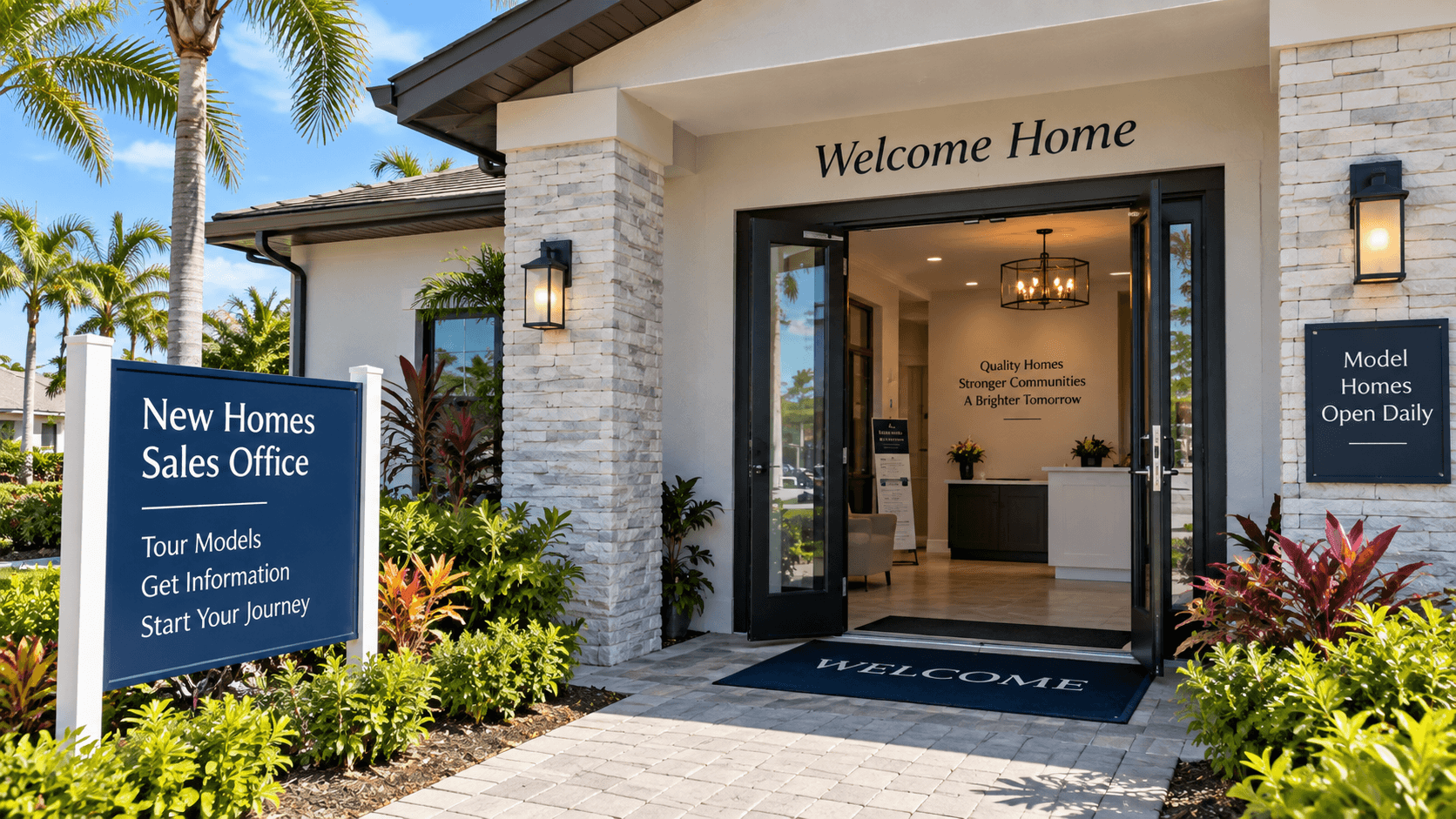
A first visit to a new-construction sales office goes better with a short list of questions ready: which homesites are currently available and at what stage of construction, what design-studio options remain open for those homesites, what the current incentives are (since these genuinely change month to month), what the HOA structure looks like, and what the realistic closing timeline is for the home you're considering. Bring the list—sales consultants field these questions constantly and can usually answer them quickly if you ask directly.
New construction vs. resale: the timeline difference
Buying an existing, already-built home typically moves faster—once financing and inspection are done, closing can happen in a matter of weeks. New construction timelines depend heavily on how far along the specific home is: a quick move-in home that's essentially finished can close almost as fast as a resale, while a home that hasn't broken ground yet can take many months. If timing matters to your move, ask directly about the anticipated completion date for any specific homesite before you get attached to it.
What "quick move-in" actually means
You'll often hear the term "quick move-in home" or "QMI" used for homes that are already under construction or complete, as opposed to homesites you'd be starting from the ground up. These typically come with a firmer completion date and less flexibility on design selections, since many choices were already made. If timeline matters more to you than customization, ask specifically which homesites at a community are QMI versus early-stage.
Working with your own agent through the process
Because builder sales consultants represent the builder, not you, some buyers choose to bring their own buyer's agent to a new-construction purchase, the same as they would for a resale. In many markets, the builder covers that agent's commission rather than the buyer, so it often doesn't add cost. If you're considering this, it's worth arranging before your first visit to a sales office, since some builders require the agent to be present or registered on that first visit for the commission structure to apply.
What happens if the community sells out before you close?
In a small, 30-home community like this one, it's worth asking directly how many homesites remain and how quickly they're moving, since a boutique community can sell through its inventory faster than a much larger subdivision. If a specific plan or homesite matters to you, don't assume it will still be available on your next visit—ask your sales consultant for a realistic sense of current pace.
A final word on patience
New construction rewards a bit of patience — in choosing a homesite, in the design process, and in waiting for the right time to sign. Rushing any of these steps to "beat" an incentive deadline is rarely worth it if it means settling for a plan or homesite that doesn't actually fit. A good sales consultant would rather walk you through the real timeline than pressure you into a decision.
Common Questions
Can I negotiate the price on a new construction home?
Sometimes — it depends on the builder, the community's current inventory, and market conditions at the time. Incentives and pricing flexibility change often, so ask directly about current options.
Do I need a real estate agent to buy new construction?
You can work with an agent even when buying directly from a builder, and in many cases the builder pays the agent's commission, not you. Ask about this before you visit a sales office.
Should I get a home inspection on a new construction home?
Many buyers do, even though the home comes with a builder warranty. An inspector may catch something worth addressing before closing rather than after.
How long does the process take from contract to closing?
It depends heavily on how far along construction is when you sign. A near-complete home can close in weeks; an early-stage reservation can take considerably longer. Ask for a current estimate on the specific homesite.
What happens to my deposit if I back out?
This depends entirely on the specific purchase agreement's terms. Read the contract carefully and ask your sales consultant to walk through the cancellation terms before you sign.
Is the appraisal process different for new construction?
The core process is similar to buying an existing home. Ask your lender about timing specific to new construction financing.
Ready to start the process? See The Domaine at SoSo — Schedule a Visit, or call 561-704-0091.