What Is a Townhouse? A First-Time Buyer's Guide
In this article
If you're new to home shopping, "townhouse" is one of those words that gets used casually but often isn't fully understood until you're actually standing in one. Here's a plain-English breakdown.
The basic definition
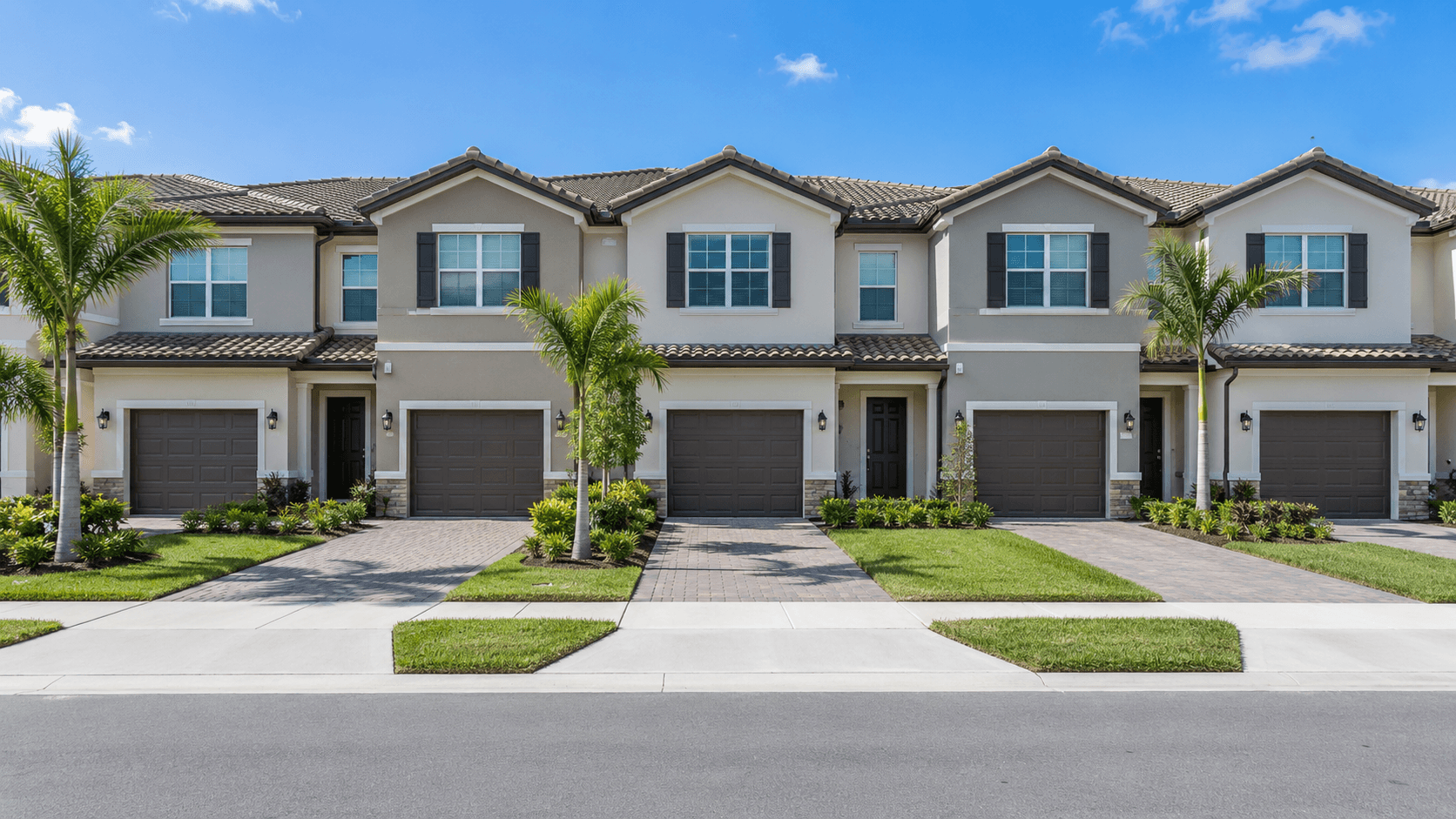
A townhouse (also spelled townhome) is a home that shares at least one wall with a neighboring unit, but where you own both the structure and the land it sits on — unlike a condo, where you typically own only the interior space. Townhouses are almost always multi-story, with living space on one level and bedrooms on another, and they're built in rows or clusters that share walls between adjoining units.
Townhouse vs. single-family home
The core difference is shared walls. A single-family home stands entirely on its own, with no structure attached to it. A townhouse shares at least one — often two — walls with the homes next to it. That shared wall is usually why townhouses cost less than a comparable single-family home in the same area: less individual lot, less standalone construction, and often lower ongoing maintenance responsibility for the owner.
At The Estates at Lotis Wellington, the two townhome plans — Ivy and Ember — sit alongside five single-family plans in the Promenade Collection, so you can compare both products within the same community. See how single-family and townhome living actually compare for the full breakdown.

Townhouse vs. condo
This is the distinction that trips up the most first-time buyers. In a condo, you typically own only the interior airspace of your unit — the walls, roof, and land underneath belong to the condo association collectively. In a townhouse, you generally own the structure itself and the land it sits on, even though you share a wall with your neighbor. That ownership difference affects what you're responsible for maintaining and what the homeowners association actually covers.
Because of that ownership structure, townhouses often come with more responsibility for exterior maintenance than a condo, but less than a fully detached single-family home. It's a genuine middle ground, not just a smaller version of either.
What comes with a townhouse HOA
Most townhouse communities, including the Townhomes Collection at Lotis Wellington, are governed by a homeowners association. HOAs typically handle shared amenities and some level of community upkeep, and dues are charged monthly or annually to cover those costs. What specifically is covered varies by community, so it's worth asking directly what the HOA handles versus what falls to you as the individual owner.
Do townhouses have yards?
Sometimes, though usually smaller than a single-family home's yard. Many townhomes include a small patio or a modest outdoor space rather than a full yard, since the shared-wall layout leaves less individual lot per unit. If a real yard is a priority, that's generally a point in favor of a single-family home over a townhouse.

Two stories, almost always
Most townhouses, including both plans at Lotis Wellington, are built as two-story homes with living space — kitchen, family room, dining — on the ground floor and bedrooms upstairs. This isn't universal, but it's common enough that it's worth expecting stairs as part of the townhouse experience, even in a relatively compact plan.
Garage and parking
Townhouse garages vary more than people expect. At Lotis Wellington specifically, the Ivy has a 1-car garage and the Ember has a 2-car garage — see the full comparison between the two if garage space matters to your decision. Not every townhouse community offers a 2-car option, so it's worth confirming garage size specifically rather than assuming.
Is a townhouse a good starter home?
For a lot of first-time buyers, yes — the lower price point relative to a single-family home in the same area, combined with real ownership of the structure and often lower maintenance responsibility, makes townhouses a common entry point into homeownership. That said, it depends entirely on your specific priorities around space, yard, and how much shared-wall living matters to you personally.
What's included when you buy new construction
If you're specifically looking at a new construction townhouse rather than resale, it's worth understanding what comes standard versus what's an upgrade. See the full included features and warranty breakdown at Lotis Wellington as one real example of how a builder structures that.
Townhouse vs. duplex — another common mix-up
Townhouses are sometimes confused with duplexes, but they're structured differently. A duplex is a single building split into two separate living units, often owned by one person who rents out both sides, or owned separately by two parties. A townhouse community, by contrast, is a series of individually owned homes built in a row, each with its own separate ownership, deed, and often its own small footprint of land. If you're comparing listings and see both terms used, it's worth confirming exactly which structure you're looking at, since the ownership and management implications differ.
What "attached" actually means in daily life
Sharing a wall with a neighbor sounds like it might mean noise or a lack of privacy, but in well-built new construction, shared walls are typically built to reduce sound transfer between units rather than amplify it. It's worth asking directly about wall construction and insulation between units if that's a concern, but for most buyers, day-to-day life in a townhouse doesn't feel meaningfully different from a detached home once you're inside your own unit with the door closed.
Financing a townhouse
Townhouses are generally financed the same way single-family homes are — a standard mortgage, not a different loan product. Lenders may ask about the HOA's financial health as part of underwriting, since HOA fees factor into your monthly housing costs alongside your mortgage payment, but the core financing process doesn't differ meaningfully from buying a detached home. It's worth mentioning to your lender early that you're considering a townhouse so they can account for HOA dues in your affordability calculation from the start.
New construction townhouse vs. resale townhouse
Just like with single-family homes, a new construction townhouse comes with a builder's warranty and all-new systems, while a resale townhouse's condition depends entirely on how the previous owner maintained it and how old its roof, appliances, and windows happen to be. Read our full guide to buying new construction if you're weighing new versus resale more broadly, since the same considerations apply whether you're looking at a townhouse or a single-family home.

Bringing it back to your own search
Whichever term you started with — townhouse, townhome, or something else entirely — the important thing is understanding what you're actually comparing when you look at listings. That clarity makes every subsequent decision, from floor plan to price, easier to evaluate on its own merits.
Common Questions
Is a townhouse the same as a condo?
No — in a townhouse you typically own the structure and land, while in a condo you generally own only the interior space.
Is a townhouse a single-family home?
No — a townhouse shares at least one wall with a neighboring unit, while a single-family home stands entirely on its own.
Do townhouses have HOAs?
Most do. The HOA typically covers shared amenities and some community upkeep — ask what's specifically included.
Are townhouses always two stories?
Not always, but it's very common, including both townhome plans at Lotis Wellington.
Do townhouses have yards?
Sometimes, but usually smaller than a single-family home's yard — often a patio rather than a full yard.
Is a townhouse cheaper than a single-family home?
Generally yes, in the same area and market, largely due to the shared wall and smaller individual lot.
Ready to see a real townhouse in person? Tour a Townhouse at Lotis Wellington — Schedule a Visit or call 561-704-0091.